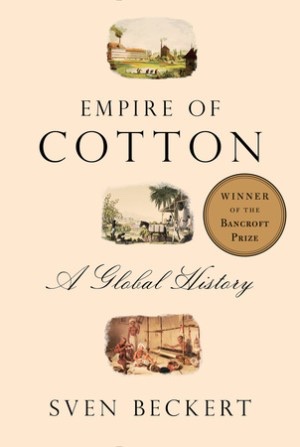
Cover of Empire of Cotton

Empire of Cotton

Sven Beckert

6 ideas

  1. War capitalism as industrialization's hidden foundation

    Before industrial capitalism there was 'war capitalism': armed merchants and states seizing land, enslaving labor, and forcing open markets outside Europe, rather than winning through peaceful competition. This violent phase supplied the cheap raw materials, capital, and captive markets that made mechanized factories profitable. The free-market capitalism of the nineteenth century grew out of this coercion and did not replace it.

  2. Strong states, not free markets, built industry

    Industrial capitalism required powerful states that could enforce contracts, build infrastructure, impose tariffs, raise armies, and discipline labor. Britain's cotton lead depended on protectionism against Indian textiles and naval control of trade routes. Markets were constructed and policed by state power; they did not arise spontaneously from individual exchange.

  3. Britain overtakes India's cotton dominance

    For centuries India was the world's leading cotton manufacturer, and its calicoes and muslins were sought across global markets. Britain banned or taxed Indian imports, copied Indian techniques, and mechanized spinning. Colonial rule then turned India into a supplier of raw cotton and a captive market for British cloth, so that deindustrialization in one place was the mirror image of industrialization in another.

  4. Slavery was central to modern industrial growth

    The explosion of Lancashire's mills depended on cheap raw cotton grown by enslaved people in the American South, which supplied most of Britain's cotton by the mid-nineteenth century. Slavery was not a premodern holdover alongside capitalism; it was the labor system that fed capitalism's leading industry. Enslaved people's productivity rose sharply under violent coercion, and that rise fed directly into mill output.

  5. The cotton famine and global reorganization

    When the American Civil War cut off Southern cotton, European manufacturers and states scrambled to develop alternative sources in India, Egypt, and Brazil. Emancipation forced capitalists to find new ways of binding rural cultivators, such as debt, sharecropping, and state-backed land and tax policies. Cotton production was thereby rebuilt on 'free' but coerced labor across the global countryside.

  6. Follow one commodity to see capitalism

    Tracing a single commodity from field to factory to consumer across continents shows the connections between plantations, mills, merchants, banks, and states that national histories keep separate. This view shows capitalism as a global system whose core and periphery are made together. Wealth in one region is traced directly to coercion, extraction, or deindustrialization in another.

Save and mark ideas in the app