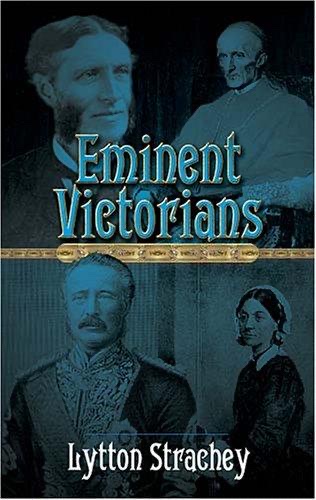
Cover of Eminent Victorians

Eminent Victorians

Lytton Strachey

5 ideas

  1. Biography as bucket lowered selectively

    Strachey's preface argues that the historian of an overdocumented age should not attempt comprehensive coverage but should 'row out over that great ocean of material' and lower a little bucket into it, bringing up characteristic specimens for close examination. Selection itself becomes the argument: by choosing which revealing details to surface, the biographer exposes an era without having to state a thesis directly.

  2. Irony as smuggled argument through tone

    Instead of attacking his subjects openly, Strachey narrates their own words and deeds in a deadpan, faintly amused voice, so the reader draws the damning conclusion themselves. Because the critique lives in juxtaposition, adjective choice, and understatement rather than explicit claims, it is hard to rebut and persuades more thoroughly than denunciation would.

  3. Nightingale: the saint who was a bulldozer

    The legend of the gentle 'Lady with the Lamp' conceals a ferociously driven administrator who bullied ministers, overworked her allies to death (notably Sidney Herbert), and reformed army sanitation through relentless pressure. Strachey shows that her real achievement came from qualities the sentimental myth erased: demonic will, impatience, and political ruthlessness.

  4. Institutional ambition wears the mask of piety

    Through Manning's rise to Cardinal, including his maneuvering against Newman, Strachey argues that Victorian religious careers were driven by worldly ambition and intrigue presented as spiritual vocation. The moral language of the institution provides cover for, and even amplifies, the pursuit of power by those most skilled at invoking it.

  5. Reformers encode their temperament into institutions

    Strachey portrays Thomas Arnold's reform of Rugby as installing moral earnestness and chapel-centered 'godliness' while leaving intellectual education thin, producing the priggish public-school gentleman. Gordon's death at Khartoum is likewise shown as the product of a volatile, mystical personality colliding with a hesitant government, so that individual quirks, amplified by institutions, become national outcomes.

Save and mark ideas in the app