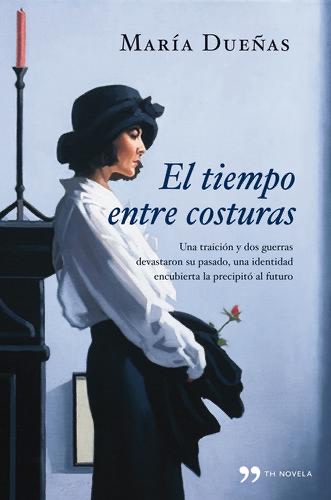
Cover of El tiempo entre costuras

El tiempo entre costuras

María Dueñas

4 ideas

  1. Abandoned seamstress becomes British couture spy

    She pays off her debt by smuggling pistols and builds a couture atelier for the protectorate's colonial elite. British intelligence later recruits her to open a salon in Madrid under the invented identity Arish Agoriuq, where she dresses the wives of Nazi officials and relays what she learns, then carries out a further mission in Lisbon.

  2. Coded messages disguised as dressmaking patterns

    Sira encodes intelligence in Morse code by drawing the dots and dashes as stitch marks along the edges of sewing patterns. The code passes inspection because a seamstress's patterns are expected clutter that no official thinks to read. Concealment here works through perceived triviality: the carrier is a gendered, domestic artifact that authorities have already categorized as meaningless.

  3. The fitting room as intelligence node

    A couture salon collects information structurally. Clients stand half-dressed, relaxed and talkative among other powerful women for hours, and they mention travel, parties and their husbands' schedules because dresses are made for specific occasions. Service workers whom the powerful treat as invisible end up holding the most candid view of elite networks.

  4. Personal influence redirects state policy

    Through Rosalinda Fox, the British lover of High Commissioner and later Foreign Minister Juan Luis Beigbeder, the novel shows an intimate relationship tilting a senior official of Franco's regime toward Britain and away from Germany. Access to one decision-maker's private life can shift a neutral country's alignment more than formal diplomacy can. This leverage is fragile, and Beigbeder's fall shows it vanishing when the relationship becomes a political liability.

Save and mark ideas in the app