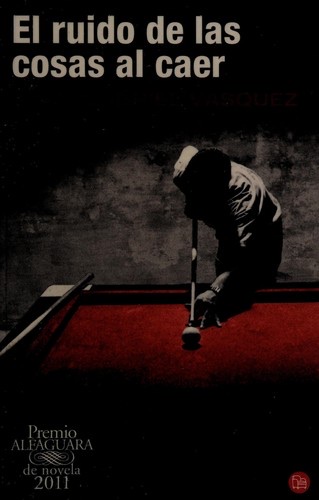
Cover of The Sound of Things Falling

The Sound of Things Falling

Colombia · 1970–1996

7 ideas

Buy on Amazon

In Bogotá, a law professor survives a shooting that kills a former pilot named Ricardo Laverde. Trying to understand the man beside him, he follows Laverde's past back to Colombia's drug-smuggling flights of the 1970s. The novel traces how that history settles into a generation's private fears.

  1. Pilot Laverde's shooting and black-box tape

    In mid-1990s Bogotá, law professor Antonio Yammara befriends Ricardo Laverde, an ex-pilot recently released after nearly twenty years in a US prison. Laverde is shot dead in the street beside him, and Antonio is badly wounded. Antonio learns that a cassette Laverde had been desperate to hear held the cockpit voice recording of the December 1995 American Airlines crash near Cali, which killed his American wife Elaine Fritts, a former Peace Corps volunteer, as she flew to rejoin him.

  2. Public violence becomes private fear

    Violence aimed at the state and the public does not stay public. It moves into the survivor's body and home as chronic fear, insomnia and withdrawal, and so damages marriages and parenting long after the event. The wounded bystander loses the capacity for intimacy because he now feels that safety anywhere, including his own home, is an illusion.

  3. Generational memory built from shared atrocities

    A generation born around 1970 can be defined by the public killings and bombings it lived through, such as the Galán assassination and the Avianca 203 bombing. Its members locate their private biographies by where they were when each one happened. Seen this way, national violence works as a common calendar that binds strangers together, and it explains why victims feel compelled to trade their memories with one another.

  4. Innocent origins of a criminal economy

    The cocaine violence of the 1980s grew out of an earlier period that felt harmless and even romantic: idealistic Peace Corps volunteers, adventurous young pilots and the marijuana flights of the late 1960s and 1970s. Ordinary people drifted into smuggling for money and thrills without foreseeing the machinery they were helping to build. Reconstructing one life backward shows that later catastrophe was assembled from small, unremarkable choices.

  5. Witness to a Pilot's Street Killing

    In 1996 Bogotá, law professor Antonio Yammara befriends Ricardo Laverde, a quiet ex-pilot newly released after nearly two decades in prison, at a billiards hall. Laverde is shot dead on the street beside him, and Yammara is badly wounded. Years later Yammara seeks out Laverde's daughter Maya and uncovers the story behind the killing: Laverde flew marijuana out of Colombia in the early 1970s, married an American Peace Corps volunteer, Elaine Fritts, and lost her in the 1995 crash of a commercial flight near Cali.

  6. A Generation Shaped by Unwitnessed Beginnings

    People born around 1970 in Colombia grew up amid bombings and assassinations whose causes had been set in motion before they could remember: the marijuana smuggling boom, idealistic foreign volunteers, reckless young pilots. To understand their own fear, they have to reconstruct their parents' decisions. Personal memory is incomplete without the prehistory that produced it.

  7. The Black Box Recording as Grief

    The recording captures the final seconds before impact, the literal 'sound of things falling.' Listening to it is an attempt to be present at a loss he could not witness, even though the recording offers sound without meaning or consolation.

Save ideas and give them a thumbs up or down in the app