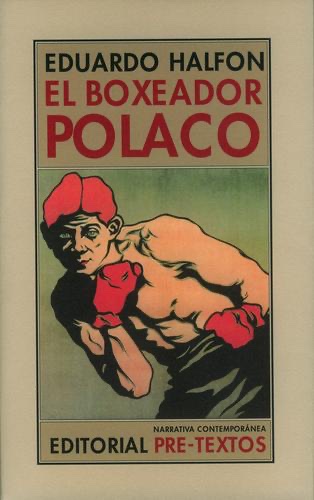
Cover of El boxeador polaco

El boxeador polaco

Eduardo Halfon

5 ideas

  1. The Grandfather's Tattoo Told as Phone Number

    As a child, the narrator is told by his Polish-Jewish grandfather that the five green digits on his forearm (69752) are his telephone number, inked there so he would not forget it. Decades later the grandfather gives a different account: in Auschwitz a fellow prisoner, a Polish boxer, coached him on what to say under interrogation, and that advice kept him alive. What he actually said stays withheld, so the survival story contains an unrecoverable gap.

  2. The Untold Part Carries the Story

    A story's force comes from what it leaves out: the reader senses a submerged mass beneath a few visible sentences. The narrator teaches this to his literature students, and the book practices it. The grandfather's crucial words, the pianist's whereabouts and the student's fate are all left open, and those omissions do the emotional work.

  3. Identity as a Label Worn Situationally

    Identity here is something a person claims, hides or disowns depending on who is asking. The narrator is Guatemalan, Jewish, Arab-descended and English-speaking, and he calls himself one or another depending on his audience. Origin becomes less a fact you possess than a story you choose to tell or withhold.

  4. The Indifferent Class and Its Hidden Poet

    Teaching a room of bored, disengaged university students in Guatemala, the narrator discovers that one quiet Kaqchikel student, Juan Kalel, writes striking poetry. The student's talent sits outside the institution's view. He then leaves his studies to return to his family's rural obligations. The episode tests how education, class and ethnicity decide whose literary gift gets recognized and sustained.

  5. Autofiction Blurring Memory and Invention

    The author gives the narrator his own name, profession and family, so the reader cannot separate reported fact from invention. The narrator doubts the grandfather's successive versions of Auschwitz, which shows that memory survives as a series of tellings rather than a fixed record. Writing about origins therefore becomes an act of constructing them rather than simply recovering them.

Save and mark ideas in the app