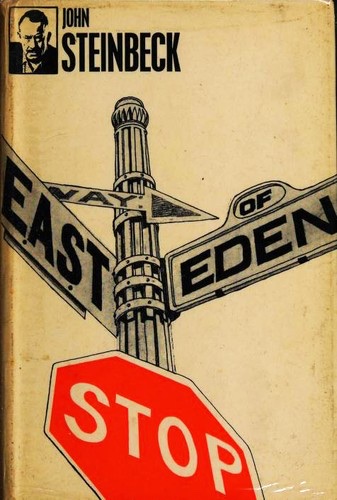
Cover of East of Eden

East of Eden

John Steinbeck

4 ideas

  1. Timshel: moral choice as 'thou mayest'

    The Hebrew word timshel in Genesis 4:7 is read not as a command ('thou shalt rule over sin') or a promise ('thou shalt') but as permission: 'thou mayest.' This translation puts the capacity to overcome evil inside the individual. A person is neither forced into sin nor guaranteed to triumph over it, so every outcome is a choice they own.

  2. Rejected love produces the Cain response

    The book argues that the deepest terror a child has is not being loved, and rejection is the hell it fears. Rejection breeds anger, anger pushes the child toward some crime in revenge for the rejection, and the crime breeds guilt, so the pattern repeats across generations. It treats this sequence of rejection, rage, crime and guilt as the core story of human wrongdoing.

  3. Cal's rejected gift and Aron's destruction

    Cal Trask earns $15,000 speculating on bean prices during World War I and gives it to his father Adam to replace money Adam lost on a failed lettuce-shipping venture. Adam refuses it as war profiteering and praises Cal's brother Aron instead. In spiteful revenge, Cal takes Aron to meet their mother Cathy, who runs a brothel. Aron is shattered, enlists, and is killed in France, and Adam suffers a stroke on hearing the news. On his deathbed Adam gives Cal the word 'timshel,' freeing him to choose beyond his guilt.

  4. Inheritance as tendency, not destiny

    The book shows children born with inherited dispositions, as when Cal fears he carries his monstrous mother Cathy's evil. It holds that these dispositions do not decide who a person becomes. Temperament and upbringing supply the raw material, but the moral self is formed by what the person does with it. Reading character this way turns 'I am bad because of where I come from' into 'I have this tendency and can act against it.'

Save and mark ideas in the app