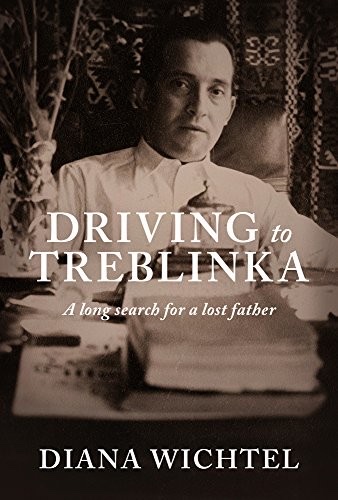
Cover of Driving to Treblinka

Driving to Treblinka

Diana Wichtel

4 ideas

  1. The father who never followed

    In the 1960s Diana Wichtel's New Zealand-born mother moved the children from Vancouver to New Zealand. Decades later Wichtel, by then a journalist, used archives, relatives and a trip to Poland to reconstruct both his wartime survival and his decline and death in Canada, a fate the family had never properly known.

  2. Inherited silence as a transmitted wound

    Survivors often do not narrate their trauma, so their children inherit gaps instead of stories: an unexplained absence, a mood, a forbidden subject. The unknowing becomes its own burden. The second generation carries the shape of a loss without its content, and has to do archival and imaginative work to fill it in.

  3. Investigating your own family like a stranger

    Applying reporter's tools to one's own family, such as records requests, cross-checking testimony and site visits, turns private grief into a verifiable account. It also exposes how unreliable family memory is. Professional distance becomes a way of getting close to what the family could not bear to look at, though the investigator can never be fully outside the story.

  4. Place restores what records cannot

    Standing at the actual sites, such as the Warsaw streets and the Treblinka memorial field, converts statistics and documents into felt reality in a way paperwork cannot. The physical journey is not tourism but a necessary part of mourning people who left no graves. It gives the descendant somewhere to put a loss that otherwise has no location.

Save and mark ideas in the app