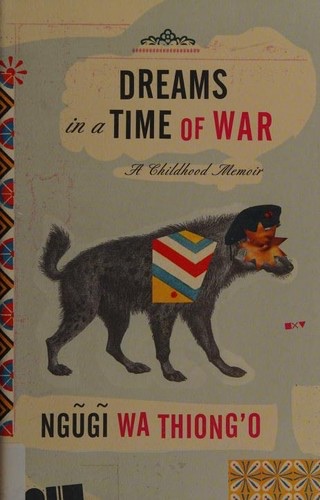
Cover of Dreams in a Time of War

Dreams in a Time of War

Ngũgĩ wa Thiong'o

4 ideas

  1. A peasant mother's bargain over schooling

    Ngũgĩ's mother, Wanjikũ, one of his father's four wives, had no money and no formal education. She offered to send him to school only if he promised always to do his best and never to make her regret the sacrifice. That promise shaped his whole schooling, and it turned education from a personal chance into a debt owed to someone who had given up scarce resources for it.

  2. Deaf brother shot for not obeying

    During the Emergency, Ngũgĩ's deaf half-brother Gitogo was shot dead by a British soldier. He did not stop when ordered because he could not hear the command. The episode shows how counterinsurgency rules read any failure to comply as hostility. People who could not perceive the rules were killed by them.

  3. Independent schools as anticolonial institution-building

    Gĩkũyũ communities broke with mission schools and built their own independent (karing'a) schools, funded and run locally. Schooling became an act of cultural self-assertion rather than an absorption of missionary values. The colonial state recognized the threat and shut these schools once the Emergency began. Control over who educates children is therefore a political battleground, not a neutral service.

  4. Evening storytelling as the first literacy

    In the polygamous compound, the evenings of oral storytelling in Gĩkũyũ among mothers and half-siblings trained Ngũgĩ's imagination before he could read. Seen this way, a child's first grounding in narrative, language, and moral reasoning comes from the home's oral culture, not from school. Formal literacy is built on top of that foundation rather than creating it.

Save and mark ideas in the app