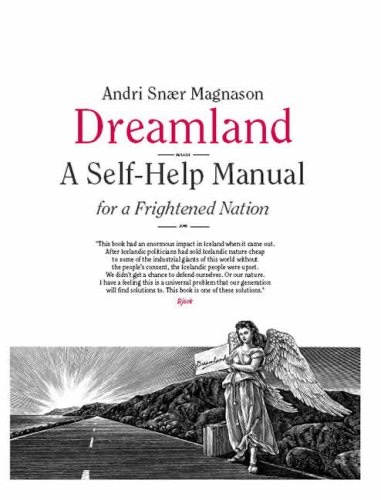
Cover of Dreamland

Dreamland

Iceland · 1995–2006

9 ideas

Buy on Amazon

A polemic against Iceland's policy of damming highland rivers for aluminium smelters, arguing a nation ruled by fear has sold its wilderness and imagination for a one-industry future.

  1. Fear-governed nations trade future for security

    A population persuaded that economic collapse is imminent will accept irreversible sacrifices it would otherwise reject, because fear narrows attention to a single visible rescue. Iceland's heavy-industry policy was sold as the only protection against unemployment and rural decline, so a nation-altering choice escaped real deliberation.

  2. The dismissal of 'something else'

    Critics of the smelters were mocked for wanting 'something else' (eitthvað annað), as if alternatives were vague fantasy. Magnason turns the jibe around: the scattered 'something else' of small firms, tourism, software, culture and services already made up most of the economy. Only the single large project was treated as concrete and credible.

  3. Kárahnjúkar dam flooding the eastern highlands

    Iceland built one of Europe's largest dams at Kárahnjúkar and flooded a large reservoir in untouched highland wilderness. The power went to a single Alcoa aluminium smelter at Reyðarfjörður at prices kept confidential. The case shows how a permanent loss of landscape can be committed to one foreign buyer under one contract.

  4. Heavy industry buys few jobs expensively

    Measured per job created, damming rivers for smelters is extraordinarily costly in capital, energy and irreplaceable land. Magnason argues that harnessing nearly all of Iceland's rivers would employ only a small fraction of the workforce. It would also lock the economy into dependence on volatile commodity prices.

  5. Marketing a country's lowest energy prices

    Magnason treats it as a self-portrait: a nation presenting its rivers as a cheap commodity for foreign industry rather than as a source of distinctive value. Positioning yourself as the cheapest supplier invites only the buyers who value you least.

  6. Unseen wilderness counts as empty

    Land that few people have visited and that no market prices gets treated as wasteland, so destroying it looks costless. Magnason shows how the highlands were described as barren and useless by people who had never seen them. The loss becomes visible only once people encounter and name what was there.

  7. Fear-governed nations choose single big solutions

    A population persuaded that it is on the brink of collapse, facing depopulation, unemployment and irrelevance, will accept one massive, state-backed rescue project it would otherwise reject. Fear narrows the imagined options to the one tangible thing on offer, so the policy is sold by manufacturing helplessness rather than by showing that it is the best choice.

  8. The dismissed 'something else' economy

    Critics of the dams were mocked for proposing 'something else' (eitthvað annað) instead of smelters, as if unnamed alternatives were no alternative at all. The book argues that this dispersed, unpredictable mass of small ventures, skills, culture and startups is how modern economies actually grow. It cannot be named in advance precisely because it comes from many people's initiative, not central planning.

  9. Imagination as a nation's real resource

    Treating rivers and energy as the country's main assets reflects a lack of imagination rather than an economic necessity. A society that believes its people's creativity is worthless will sell its physical resources cheaply. A society that trusts its imagination treats untouched nature and human ingenuity as the durable sources of future wealth and identity.

Save ideas and give them a thumbs up or down in the app