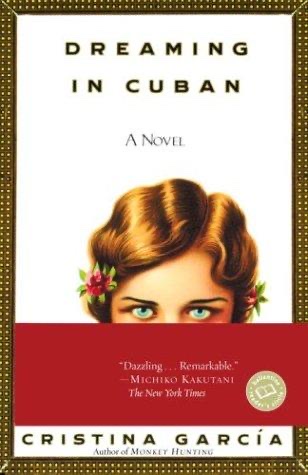
Cover of Dreaming in Cuban

Dreaming in Cuban

Cristina García

4 ideas

  1. Pilar's 1980 return to Havana

    Pilar, raised in Brooklyn by her fiercely anti-Castro mother Lourdes, travels with her to Cuba in 1980 to see her grandmother Celia, who stayed loyal to the Revolution. After living there, Pilar concludes that New York is where she belongs, 'not instead of here, but more than here.' During the same visit Lourdes helps Pilar's cousin Ivanito escape through the Peruvian embassy, and Pilar lets it happen without telling Celia, who then walks into the sea.

  2. Political allegiance as displaced personal wound

    Each woman's ideology can be read as a repurposing of a private injury rather than a reasoned position. Celia channels her lost love for the Spaniard Gustavo and her loveless marriage into devotion to 'El Líder' and guarding the coast. Lourdes's rabid anti-communism and her Brooklyn 'Yankee Doodle' bakery follow her rape by a revolutionary soldier and the seizure of her family's estate. Read this way, political conflict between relatives is partly a conflict between their unresolved griefs.

  3. Unsent letters as private historical archive

    Celia writes monthly letters to Gustavo from 1935 to 1959 and never sends them, which turns personal correspondence into a hidden record of a life lived alongside national history. The letters stop on the day of Pilar's birth, when Celia passes the role of witness and memory-keeper to her granddaughter. Private, unofficial writing preserves what public narratives on both sides of the water erase.

  4. Exile freezes the homeland into myth

    People separated from a homeland by politics stop encountering it as a changing place and hold it as a fixed memory or a fixed enemy. Lourdes's Cuba is pure villainy and Celia's America is pure imperialism, while Pilar's secondhand Cuba is an idealized longing.

Save and mark ideas in the app