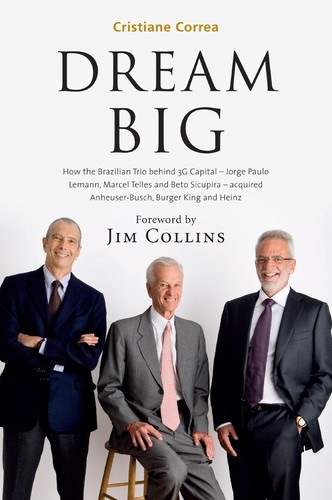
Cover of Dream Big

Dream Big

Cristiane Correa

4 ideas

  1. From Garantia brokerage to AB InBev

    Jorge Paulo Lemann bought a small Rio brokerage licence in 1971 and, with Marcel Telles and Carlos Sicupira, built it into Banco Garantia. The partners then used bank profits to buy Lojas Americanas (1982) and the brewer Brahma (1989), installing the bank's culture in each. Brahma merged with Antarctica to form AmBev (1999), combined with Interbrew (2004), and bought Anheuser-Busch for about $52 billion (2008), which made the same small group of Brazilians owners of the world's largest brewer.

  2. Zero-based budgeting as a recurring discipline

    Instead of taking last year's spending and adjusting it, every cost line is rebuilt from zero each cycle. Each expense has a named owner who must justify it against current needs. This makes waste visible and forces constant cuts, and after each acquisition it became the group's main tool for pulling out margin quickly.

  3. Low salary, high bonus, partnership meritocracy

    They hired 'PSD' people: poor, smart, and with a deep desire to get rich. Fixed pay was modest, bonuses were large and tied to measurable targets, and the chance to become an owner went to the top performers. Regular ranking pushed out low performers, so ambitious people competed to deliver numbers and the partnership continually renewed itself from within.

  4. The meritocracy machine carries built-in costs

    A system that rewards hitting near-term numbers also teaches people to chase those numbers at the expense of long-term capability. At Garantia, after the founders turned their attention to industry, aggressive trading by younger partners left the bank badly exposed in the 1997–98 emerging-market crises, and it was sold to Credit Suisse in 1998. In the acquired companies, the same approach produced deep layoffs, cultural clashes, and heavy strain on staff.

Save and mark ideas in the app