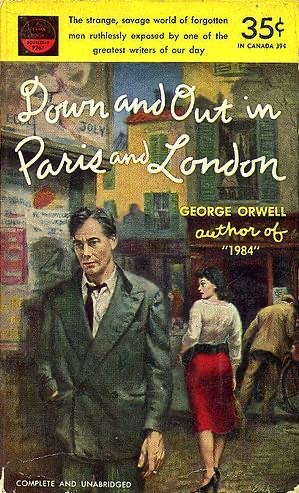
Cover of Down and Out in Paris and London

Down and Out in Paris and London

George Orwell

4 ideas

  1. Poverty's first discovery is boredom and deceit

    Orwell argues the defining texture of poverty is not dramatic suffering but a narrowing of life into boredom, petty complications, and constant lying to hide one's state. Poverty frees a person from the future by reducing concern to the next meal. The shame of being seen as poor forces elaborate small deceptions, like pretending to have eaten, that use up energy and isolate the poor person.

  2. The plongeur as pointless modern slave

    Orwell shows the restaurant dishwasher working seventeen-hour days in filthy heat, a job that exists mainly to supply the look of luxury rather than real value to anyone. He argues such drudgery survives because the comfortable classes fear that a leisured mob would be dangerous, so keeping the poor exhausted serves as social control. On this view much low-status labour is kept going to keep people occupied, not because the work itself is necessary.

  3. Behind the hotel kitchen's service door

    Orwell describes the luxury hotel as a two-faced building: elegant dining rooms on one side, and on the other a cramped, sweltering kitchen where cooks spit in sauces and food is handled with dirty fingers. The higher the price of a dish, the more handling and manipulation it has gone through. The customer pays for an appearance of cleanliness and refinement that is manufactured by hiding squalor.

  4. Vagrancy laws manufacture the tramp's degradation

    Orwell argues that tramps are not a separate, depraved type of person but ordinary men made idle, underfed, and demoralised by the system around them. The rule that a man may stay only one night in each casual ward forces endless walking between towns, and a diet of bread and margarine starves him. He proposes letting tramps work on local farms in exchange for decent food, so that their wasted time becomes useful work.

Save and mark ideas in the app