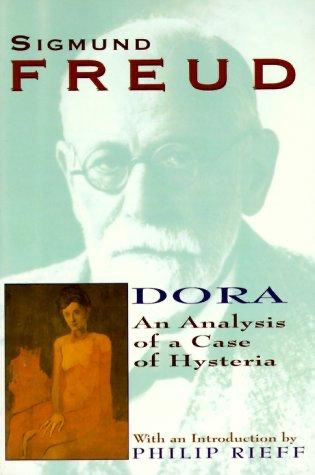
Cover of Dora

Dora

Sigmund Freud

4 ideas

  1. Dora walks out after eleven weeks

    In 1900 Freud treated Ida Bauer, an 18-year-old whose symptoms included a nervous cough and loss of voice, after her father's friend Herr K., whose wife was her father's mistress, made sexual advances toward her; Dora felt her father had handed her to Herr K. in exchange for his affair. Freud insisted she secretly desired Herr K. and interpreted two of her dreams, a burning house and a journey after her father's death, as evidence. Freud later admitted he had failed to notice that she was treating him as she treated Herr K.

  2. Transference as re-enacted old relationships

    The patient does not only recall past relationships but relives them with the analyst, giving the therapist feelings and roles that belong to earlier figures such as a father or a would-be seducer. If these projections are not named and interpreted as they happen, the patient acts them out, for example by abandoning the analyst as a form of revenge, instead of working them through. Freud came to see transference as the main obstacle to treatment and also its most powerful tool.

  3. Symptoms speak the language of repressed desire

    Freud argues that hysterical symptoms such as a cough or aphonia are compromises that express a forbidden wish and its repression at once, turned into bodily form. He says a symptom usually carries several meanings and is sustained by 'secondary gain', the practical advantages it brings, such as the attention or leverage Dora gained over her father. On this view the body becomes a text that can be decoded by tracing chains of association.

  4. The case history as unreliable narrative

    Read as a text, the case history exposes its author: Freud's gaps, his insistent interpretations, and his defensive footnotes reveal his own desires, including his countertransference, as clearly as they reveal the patient's. The doctor's authority to tell the story does not make the story true, and the patient's silence and departure are a rebuttal the document cannot fully absorb. This way of reading moves the focus from what the analyst concluded to what the telling shows about the analyst.

Save and mark ideas in the app