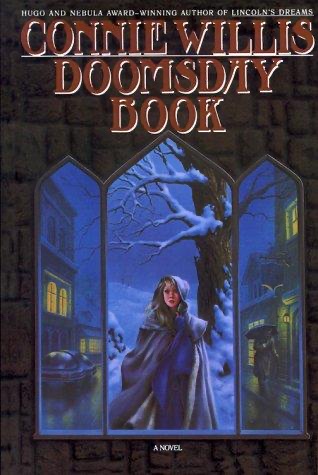
Cover of Doomsday Book

Doomsday Book

Connie Willis

4 ideas

  1. Kivrin's recorded year in plague-struck Skendgate

    Historian Kivrin Engle, meant to be sent to 1320, lands instead in 1348 because the fevered technician miscalculated the drop. She takes shelter with a manor family near Oxford while she recovers from a 2054 flu she carried with her.

  2. Institutional ambition overrides safety margins

    The acting department head pushes an early, prestige-seeking drop into a period rated dangerous and brushes aside the expert who wants more checks. Once the operation is underway, bureaucratic procedure and quarantine rules make it harder for anyone to find and correct the error. The disaster comes less from a single mistake than from a hierarchy where the person with authority is not the person with the knowledge.

  3. Studied past versus inhabited past

    Kivrin arrives full of scholarship, yet her Middle English is unintelligible, her customs are subtly wrong, and her textbook categories fail to predict how people behave. Living among them turns 'medieval peasants' and 'plague mortality statistics' into specific people she loves and buries. Seen this way, historical knowledge is an abstraction that falls apart on contact with individuals, and understanding requires presence and grief, not just data.

  4. Mirrored pandemics across two centuries

    The novel runs a 2054 influenza epidemic in Oxford alongside the 1348 Black Death and shows the same human responses in both. These include fear of outsiders, the search for someone to blame, hoarding and petty self-interest, and quiet caretakers who keep working while exposed. Modern medicine changes the death rate but not the social behavior epidemics provoke.

Save and mark ideas in the app