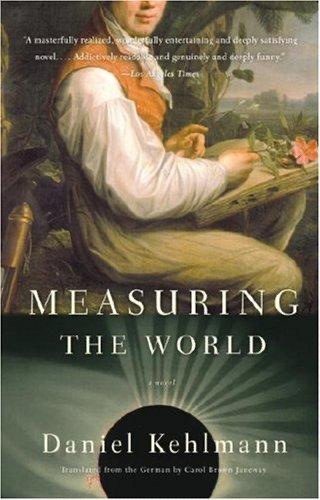
Cover of Die Vermessung der Welt

Die Vermessung der Welt

Daniel Kehlmann

3 ideas

  1. Reasoning at home versus measuring abroad

    The book contrasts two leanings in how its heroes know the world: Gauss favors reasoning and finds travel largely pointless, while Humboldt insists on measuring things on site with instruments. The contrast is one of emphasis rather than a clean split, since Gauss also surveys land and takes magnetic measurements, and Humboldt tests theories such as neptunism. Neither approach is presented as complete on its own.

  2. Measurement strips wonder from the measured world

    Humboldt's compulsion to quantify everything, whether cave depths, blood, lice or star altitudes, turns living encounters into numbers and blinds him to the people, myths and dangers in front of him, while Bonpland suffers the bodily cost. The novel argues that the project of taking the world's measure is also a form of disenchantment and control: what gets measured gets tamed, and what cannot be measured, such as spirits, feeling and local meaning, is treated as not really there.

  3. Genius and its cost to others

    Kehlmann gives both geniuses marked social blind spots: Gauss is impatient with slower minds, leaves his wedding night to write down a formula, and pressures his son Eugen to study law and mathematics against the boy's wishes, while Humboldt is sexually repressed and often inattentive to his companion. The comedy shows others, family and friends, paying a private cost for the men's brilliance, even though both remain capable of love and friendship.

Save and mark ideas in the app