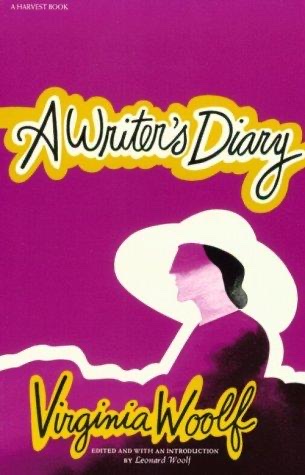
Cover of Diary

Diary

Virginia Woolf

4 ideas

  1. The fin in the waste of water

    In September 1926, finishing To the Lighthouse at Rodmell, Woolf recorded a vision of 'a fin passing far out' over a waste of water and marked it as the germ of a future book. Over the next four years the diary tracks that image becoming 'The Moths' and then The Waves, through false starts, rewrites and doubts. On 7 February 1931 she wrote that, having reached the end, she had 'netted that fin in the waste of water.' It is a documented case of a novel's whole gestation, from a single image to a finished book, recorded as it happened.

  2. Private writing as loosening the ligaments

    Woolf treated the diary as practice with no reader and no standard. Writing fast and roughly, 'for my own eye only,' loosened the ligaments of her prose and caught things a careful pace would have filtered out. The diary served as a capacious hold-all where material was dumped unsorted and later found to have arranged itself into usable shapes.

  3. Writing work amid the recorded daily life

    The full diary records Woolf's thinking about her books alongside quarrels with the servant Nelly Boxall, calculations of book earnings, and the social cost of parties. Read in this unselected form, her writing is visibly worked out in the same pages as the domestic and financial life that Leonard Woolf's 1953 selection cut.

  4. Illness as a fertile creative interval

    The diary repeatedly records headaches and breakdowns that forced Woolf to stop working. It also records her belief that these enforced blank intervals were among her most artistically fruitful times, when 'one becomes fertilised' and books take shape below conscious effort. On this account, the incapacity that interrupts the output is also part of how the output is produced.

Save and mark ideas in the app