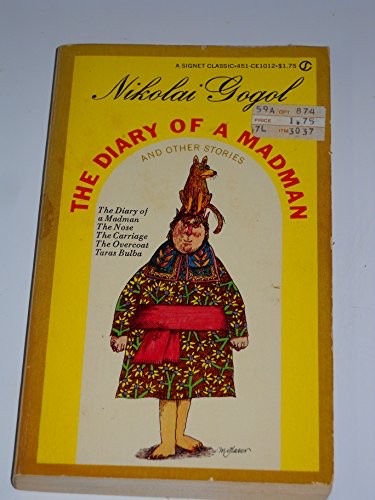
Cover of Diary of a Madman

Diary of a Madman

Nikolai Gogol

4 ideas

  1. Clerk Poprishchin comes to believe he is King of Spain

    Aksenty Poprishchin, a titular councillor who sharpens quills for his department director, falls for the director's daughter Sophie, hears her lapdog Medji talk, and steals the dogs' letters, which reveal that Sophie mocks him and is to marry a chamberlain. He then reads of the disputed Spanish throne, declares himself King Ferdinand VIII, and is confined in an asylum he takes for the Spanish court. The last entry moves from a plea to his mother to save him into an absurd remark about the Dey of Algiers.

  2. Delusion as compensation for blocked rank

    When a rigid hierarchy fixes a person's worth by rank and gives no legitimate path upward, the mind can build an imaginary route instead. Poprishchin's madness is not random: his fantasy keeps the logic of the Table of Ranks and simply puts him at the very top, a king who outranks the generals and chamberlains who scorned him. The delusion answers the precise humiliation that produced it.

  3. Diary dates register the narrator's collapse

    The diary form lets the reader track Poprishchin's breakdown through its dating as well as its content. Ordinary dates give way to entries like 'Year 2000 April 43rd,' a 'No date' entry, and 'Martober 86th,' so the calendar's distortion marks his loosening grip on reality. Because the story is told in the first person, the reader follows his delusion from inside, including the point where his reasoning itself falls apart.

  4. Bureaucratic contempt surrounds Poprishchin's madness

    The story sets Poprishchin's decline against a world that judges him by his grade and uses him as a copyist and quill-sharpener. His superiors snub him, and even the lapdog's letters describe him with contempt. The asylum's beatings and head-shaving continue this indifference, although the story leaves open how far such treatment causes his madness.

Save and mark ideas in the app