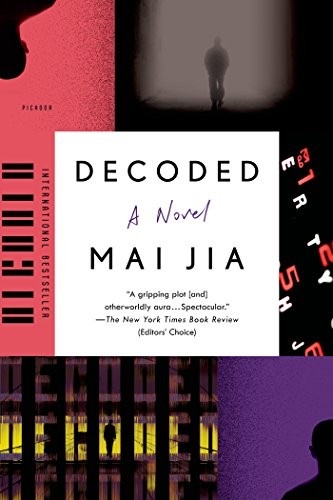
Cover of Decoded

Decoded

Mai Jia

4 ideas

  1. Rong Jinzhen breaks PURPLE, then collapses

    Rong Jinzhen, a withdrawn and socially odd mathematical prodigy, is recruited from university into the secret cryptography Unit 701, where he breaks the enemy cipher PURPLE. While working on its successor, BLACK, his notebook of work is lost when his belongings are stolen during a trip. The case shows a single irreplaceable mind carrying a state's most critical problem, and how one material loss can end both the work and the man.

  2. Codebreaking as a duel between two minds

    A cipher is not an impersonal puzzle but the frozen thinking of a particular designer, so breaking it means reconstructing how that person reasons. The deeper the breaker enters the enemy's mind, the more his own mind is reshaped by it. The skill that makes a great cryptanalyst therefore also exposes him to psychic damage.

  3. The state consumes the genius it recruits

    A secret institution selects a mind for the narrowness that makes it useful: obsession, isolation, and indifference to ordinary life. It then directs that mind entirely at one problem and gives it no other anchor. This makes the prodigy extraordinarily productive and extraordinarily fragile, and the institution ends up spending him like a resource rather than sustaining him as a person.

  4. Secret lives survive only as testimony

    Classified work leaves no public record, so the life of someone who did it can only be rebuilt from other people's interviews, recollections, and surviving fragments. Seen this way, what becomes known of such a person is shaped by who survived to talk and what they chose to say. Gaps and contradictions in the account are the fingerprint of secrecy itself, not flaws in the telling.

Save and mark ideas in the app