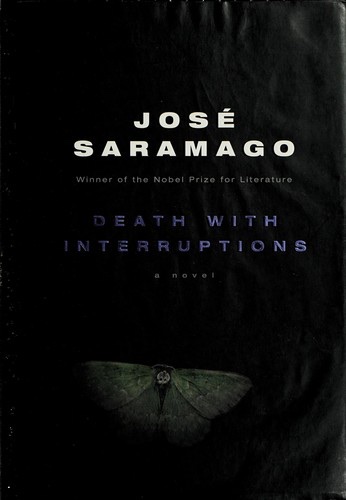
Cover of Death with Interruptions

Death with Interruptions

José Saramago

4 ideas

  1. The country where nobody dies

    At midnight on New Year's Day in an unnamed country, death stops: the terminally ill and fatally injured linger indefinitely in suspended states. Families begin smuggling their dying relatives across the border to die, a criminal network called the 'maphia' takes over the trade with state collusion, and death then resumes with a policy of sending violet letters giving each person one week's notice. The episode shows every institution, from church and insurers to funeral parlours, hospitals and government, collapsing or improvising once a single natural constant is removed.

  2. Institutions secretly depend on death's regularity

    Religions need death to give resurrection meaning, insurers need it to price policies, care homes and hospitals need it to free beds, and states need it to keep pension burdens bearable. Removing mortality does not produce utopia. It exposes how much of social order is built on a steady, predictable outflow of people, so the institutions that claim to fight death are actually structured around it.

  3. Single-rule suspension reveals hidden systems

    Change exactly one basic law of the world, keep everything else realistic, and follow the consequences with bureaucratic literalness. What the change breaks shows which structures were load-bearing but invisible. The method turns an absurd premise into an x-ray of ordinary governance, paperwork and self-interest.

  4. Advance notice turns death into terror

    When death resumes, she mails each person a letter a week before they die. The notice was meant as a courtesy, yet it produces mass dread, because knowing the date removes the protective uncertainty that lets people live as if death were far off. The book also shows death's power failing on the one person, a cellist, whose letter keeps returning undelivered, and she ends up humanised by encountering him.

Save and mark ideas in the app