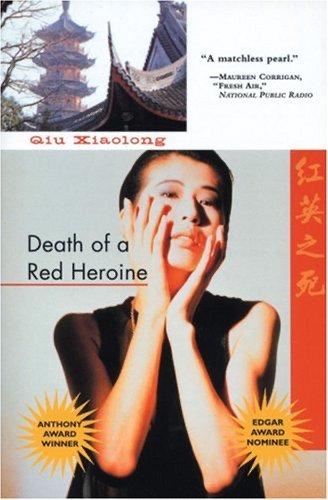
Cover of Death of a Red Heroine

Death of a Red Heroine

Qiu Xiaolong

4 ideas

  1. Model worker's murder leads to Party son

    In Shanghai in 1990, the body of Guan Hongying, a nationally celebrated model worker at a department store, is found in a canal. Chief Inspector Chen Cao and Detective Yu Guangming trace her to a secret affair with Wu Xiaoming, a photographer and son of a powerful senior cadre, who killed her when the relationship threatened his position. The investigation is repeatedly slowed by Party superiors, and it goes forward only when the political climate allows it.

  2. The public exemplar loses private life

    A person chosen as an official role model must display the approved virtues at all times. Every normal want, such as romance, desire or ordinary mistakes, becomes something she has to hide. That secrecy isolates her and makes her dependent on whoever shares her secret, and the image built to protect the ideology is what leaves her defenseless.

  3. Truth as a political timing problem

    In a system where the Party controls justice, whether a crime can be exposed depends less on evidence than on when and how the case fits current political priorities. The investigator must read factional balances and campaign cycles as closely as the clues. A solved case can still be suppressed, and a guilty verdict can arrive because it happens to serve a political purpose rather than justice.

  4. Privilege is rationed through everyday material goods

    In Chen's Shanghai, state power reaches people mainly through housing, food and small privileges. Who gets an apartment, who eats well, and who lives three generations to a room are all decided by rank and connections. This makes loyalty material: an official who owes his flat to the Party has something concrete to lose by pursuing a case against a Party family.

Save and mark ideas in the app