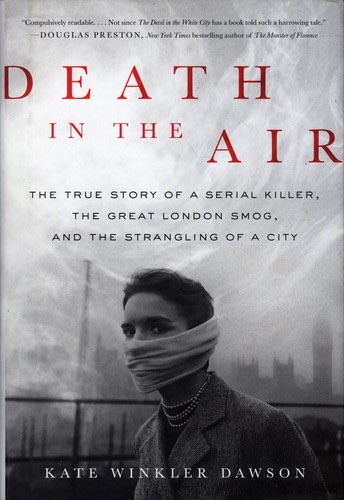
Cover of Death in the Air

Death in the Air

Kate Winkler Dawson

4 ideas

  1. London's Great Smog of December 1952

    From 5 to 9 December 1952, a temperature inversion trapped coal smoke over London, cutting visibility to a few feet and producing sulfur-laden fog. Hospitals and undertakers were overwhelmed, and excess deaths were estimated at about 4,000 at the time and later revised toward 12,000. The government initially treated it as a weather event, and the Clean Air Act did not pass until 1956.

  2. Reclassifying deaths as a denial tactic

    When mortality stayed high for weeks after the fog lifted, officials attributed the excess deaths to an influenza outbreak rather than the smog. Assigning deaths to a cause that implies no policy failure lets a government avoid costly regulation while appearing to follow the data. Classifying causes of death is a political choice, and the chosen category determines whether anyone is obliged to act.

  3. Exporting clean coal, burning dirty coal

    Postwar Britain, short of foreign currency, exported its higher-grade coal and left cheap, high-sulfur fuel such as 'nutty slack' for domestic hearths and power stations. The economic policy that balanced the national accounts concentrated toxic smoke in the cities. The pollution was a direct product of fiscal priorities, not an accident of weather.

  4. Christie's murders and Timothy Evans's execution

    In 1950, Timothy Evans was hanged for murdering his infant daughter at 10 Rillington Place. Christie was exposed in March 1953 when a new tenant found bodies hidden in the walls. Evans received a posthumous pardon in 1966, and the case fed Britain's abolition of the death penalty.

Save and mark ideas in the app