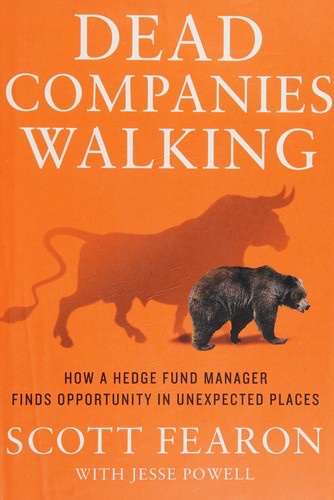
Cover of Dead Companies Walking

Dead Companies Walking

Scott Fearon with Jesse Powell

4 ideas

  1. Learning only from the recent past

    Managers take the conditions of the last few good years, such as easy credit, rising prices, and strong demand, as the permanent baseline. They build debt, capacity, and expansion plans on that baseline, so when the cycle turns, a company tuned for the boom cannot survive a normal environment.

  2. Hubris from a past winning formula

    A management team that succeeded once assumes its formula is a general truth rather than a fit to particular circumstances. It keeps applying the same playbook to new markets or changed conditions and reads early failures as execution noise, not as evidence the formula has stopped working.

  3. The tech dinosaur's denial of disruption

    Incumbents facing a technological shift explain away falling sales as cyclical, temporary, or a problem of marketing and execution. Admitting the core business is obsolete would threaten their identity and investments, so they keep optimizing a model whose market is disappearing.

  4. Reading management through face-to-face visits

    Meeting executives and visiting their operations reveals signals that filings hide: how leaders explain bad news, whether they know their customers, and whether they are isolated from the realities of their business. Defensiveness, blaming outside forces, lavish spending during decline, and a leadership culture cut off from the front line are warning signs that a company is walking dead.

Save and mark ideas in the app