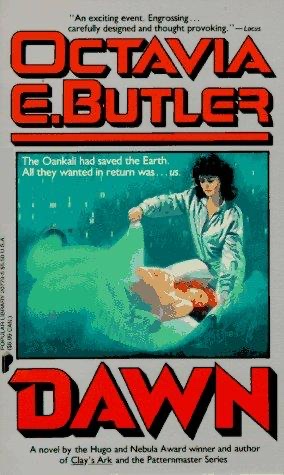
Cover of Dawn

Dawn

Octavia E. Butler

4 ideas

  1. Intelligence Yoked to Hierarchy Ensures Self-Destruction

    The Oankali diagnose humanity's fatal flaw as a structural mismatch: a newer trait, intelligence, placed in service of an older, deeper one, the drive toward hierarchy. Because hierarchy seeks dominance and intelligence amplifies the means of seeking it, the combination escalates until it produces catastrophe such as nuclear war. On this view, better values or education cannot correct the flaw, because it lies in the ordering of drives rather than in any single behavior.

  2. Lilith Awakened to Awaken Other Humans

    Lilith Iyapo, a Black American widow, wakes centuries after a nuclear war inside a living Oankali ship. The Oankali then give her the task of reviving and leading a group of human survivors to prepare them for return to a restored Earth. Because she is tied to the aliens and has been altered by them, the humans she wakes suspect her as a collaborator, and when some turn violent, her lover Joseph is killed. She ends up pregnant with an Oankali-human child conceived without her consent, holding a position of borrowed authority that neither side fully trusts.

  3. The Trade: Survival Priced in Genetic Merger

    The Oankali are gene-traders who must merge with other species to continue. They offer rescued humans a restored planet only on the condition that humans breed with them through a third-gendered ooloi, so that the offspring are neither species. Refusal means sterility and the end of the human line, so the choice is structured so that preserving humanity as it was is not available.

  4. Benevolent Power Still Negates Consent

    Even so, they override refusals by reading bodies chemically and deciding that people's physiology wants what their words deny. Seen this way, the problem with coercion is not cruelty or bad intent: a party that claims to know your desires better than you do has removed consent, however kindly it acts. This lens moves attention from a powerful actor's motives to whether the weaker party's stated 'no' is allowed to stand.

Save and mark ideas in the app