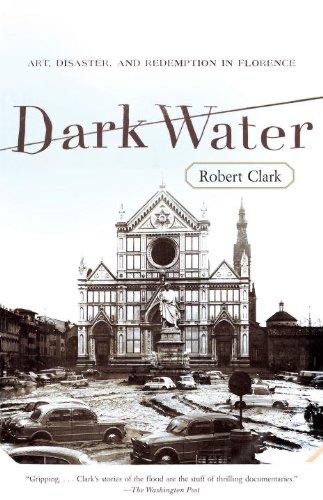
Cover of Dark Water

Dark Water

Robert Clark

3 ideas

  1. Cimabue's Crucifix and the 1966 Flood

    On November 4, 1966, the Arno overflowed and filled Florence's streets with water, mud, and heating oil. Cimabue's thirteenth-century Crucifix in Santa Croce was submerged and lost much of its painted surface. The effort to save it became the emblem of the flood's cultural losses and of the years of restoration that followed.

  2. Mud Angels as Spontaneous Mass Rescue

    Thousands of young volunteers, many of them foreign students, came to Florence without being organized by any state body. They formed human chains to pull waterlogged books and artworks out of flooded basements such as the National Library's. Their work showed that in a sudden catastrophe, unskilled volunteers can do the time-critical first stage of rescue while experts are still scarce and official response lags.

  3. Honest Repair Makes the Loss Visible

    Some restorers filled missing areas with an abstracted pattern of color, not repainted imitation. The Crucifix was treated this way. The patch reads as whole from a distance, but up close it is clearly not the original, so the repair records the damage instead of hiding it.

Save and mark ideas in the app