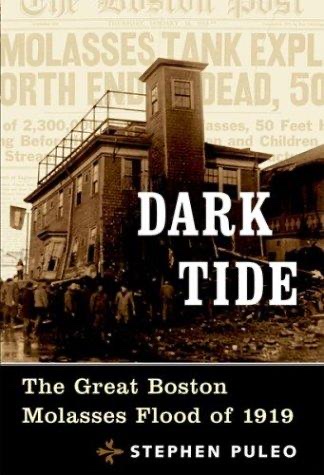
Cover of Dark Tide

Dark Tide

Stephen Puleo

4 ideas

  1. The 1919 Boston Molasses Tank Collapse

    On January 15, 1919, a 50-foot steel tank holding about 2.3 million gallons of molasses, owned by United States Industrial Alcohol (USIA), burst on Commercial Street in Boston's North End. A wave reported at up to 25 feet high and roughly 35 mph flattened buildings and an elevated rail structure, killing 21 people and injuring about 150. The court-appointed auditor, Hugh Ogden, took years of hearings before finding USIA liable in 1925, and the company paid about $628,000 in settlements.

  2. Schedule pressure plus non-expert oversight breeds failure

    USIA rushed the tank into service in 1915 to meet wartime demand for industrial alcohol used in munitions. It put construction under Arthur Jell, a financial officer with no engineering training who never consulted an engineer, and the tank was tested with only a few inches of water. When a technical project is run by someone judged on speed and cost rather than soundness, the checks that would reveal danger get skipped because no one in charge can recognize their absence.

  3. Normalized warning signs as concealed risk

    The tank leaked visibly from the start, and local residents collected the dripping molasses. An employee, Isaac Gonzales, repeatedly warned superiors that it groaned and might collapse. The company responded by painting the tank brown so the leaks would be less noticeable.

  4. Scapegoating fails against detailed forensic accountability

    USIA's defense argued that anarchists had bombed the tank, exploiting postwar Red Scare fears and suspicion of the neighborhood's Italian immigrants, who had little political power. Through years of expert testimony, the auditor rejected the bomb theory and found the tank structurally inadequate. The case helped push Massachusetts and other jurisdictions to require engineers to certify building plans, which shows that patient technical fact-finding can defeat politically convenient blame and convert a local tragedy into regulation.

Save and mark ideas in the app