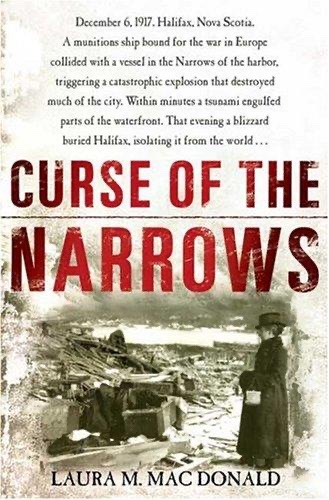
Cover of Curse of the Narrows

Curse of the Narrows

Laura M. Mac Donald

4 ideas

  1. Mont-Blanc collision in the Halifax Narrows

    On December 6, 1917, the French freighter Mont-Blanc, loaded with picric acid, TNT, guncotton and benzol, collided with the Norwegian ship Imo in the Narrows of Halifax Harbour and caught fire. About twenty minutes later it exploded in one of the largest accidental man-made blasts of the pre-atomic era, flattening the Richmond district of Halifax and parts of Dartmouth. Roughly 2,000 people were killed and about 9,000 injured, and a blizzard struck the homeless survivors the next day.

  2. Wartime secrecy removed the explosion's warning

    Under wartime practice the Mont-Blanc flew no flag marking it as an explosives carrier, so it would not attract U-boats. As a result, the crowds on shore read the burning ship as a spectacle rather than a threat. A secrecy measure meant to protect the ship from an external enemy stripped away the hazard signal that would have made nearby civilians flee.

  3. Curiosity turned windows into weapons

    Because the fire burned for minutes before the blast, thousands of people went to their windows to watch. The shock wave then drove shattered glass into their faces and eyes. The delay between a visible hazard and its detonation pulled victims into the most dangerous position, which is why the disaster produced hundreds of eye injuries and dozens of people blinded in both eyes.

  4. Boston's standing committee sped its relief

    Massachusetts already had a standing wartime Committee on Public Safety, so it organized relief within hours on the strength of telegraph reports, without waiting for an official request. A train of doctors, nurses and supplies led by Abraham Ratshesky pushed through the blizzard and arrived around December 8, after Canadian relief trains had already reached the city. Nova Scotia still thanks Boston each year with a Christmas tree.

Save and mark ideas in the app