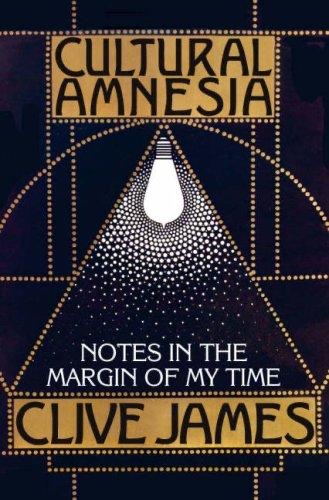
Cover of Cultural Amnesia

Cultural Amnesia

Clive James

5 ideas

  1. Egon Friedell's warning leap in Vienna

    In March 1938, just after the Anschluss, SA men came to the Vienna flat of the cabaret wit and cultural historian Egon Friedell. He jumped from his window to his death, and as he fell he reportedly called out a warning to the people on the pavement below so that he would not land on them. The episode stands for the courteous, ironic Viennese-Jewish café culture that Nazism wiped out, still considerate of strangers at the moment it was destroyed.

  2. Prose quality exposes political honesty

    The way someone writes is evidence of how honestly they think. Intellectuals who excused totalitarian regimes tend to drift into abstraction, jargon and euphemism, because concrete sentences would force them to name what was done to actual people. Clear, specific prose is therefore a moral discipline as well as an aesthetic one.

  3. The body count as the test

    Judge a thinker, artist or ideology by how it responded to the century's actual mass killings, the Holocaust and the Gulag. Brilliance, theory and aesthetic achievement do not outweigh a failure to see or condemn murder on that scale. This lens reorders reputations: some celebrated figures shrink and some minor ones grow.

  4. Intellectuals' seduction by total systems

    Many gifted twentieth-century intellectuals were drawn to Fascism or Communism because these systems promised a complete explanation and a role for the thinker in remaking society. The appeal of a total theory led them to rationalize terror as historical necessity. Liberal democracy offers no such grand design, and its untidy pluralism is precisely what protects people.

  5. Cultural amnesia as civilizational loss

    Humanist culture is not self-sustaining. It survives only if people keep remembering the specific writers, artists and lost milieus that totalitarianism destroyed or scattered, especially Central European Jewish culture. When those names and works stop being read, the knowledge of what liberal civilization is, and what it cost to lose it, disappears with them. Personal reading organized around remembered quotations is one way of resisting that loss.

Save and mark ideas in the app