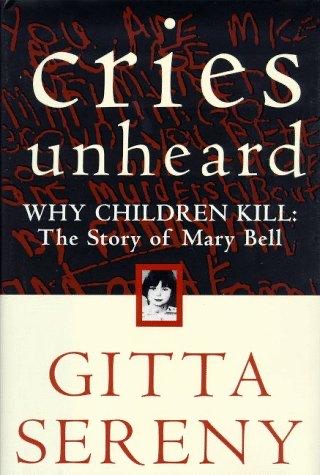
Cover of Cries Unheard

Cries Unheard

Gitta Sereny

4 ideas

  1. Mary Bell and the Scotswood killings

    In Scotswood, Newcastle, Mary Bell strangled four-year-old Martin Brown in May 1968, a day before her eleventh birthday, and three-year-old Brian Howe that July. She was convicted of manslaughter on grounds of diminished responsibility. Three decades later she told Sereny that her mother, Betty, had repeatedly tried to kill her and, from about age four, made her available to men for sex, a history Sereny presents as the unexamined background to the killings rather than a proven cause.

  2. Adult trials cannot explain child killers

    Trying a child in an adversarial adult court is built to establish guilt and assign punishment. It is not built to find out what happened to the child before the crime, so the causes that matter most are never examined. Sereny argues that children who kill need a confidential forum focused on family history and psychiatric understanding. A public spectacle, she holds, turns a damaged child into a monster and closes off both explanation and prevention.

  3. Child violence as enacted prior victimhood

    This lens reads a young child's violence as the visible end of a chain of harm done to that child, not as the starting point of the story. The useful question shifts from 'what kind of child does this?' to 'what was done to her first, and who saw it and stayed silent?'. Asked that way, the question points at the abusers, relatives and agencies who never appeared in the courtroom.

  4. Long interviews that recover buried childhood

    Sereny spent months in sustained, trust-based interviews with the adult Bell. She let memories surface over time but also asked hard questions and challenged accounts she suspected were untrue. The method drew ethical objections, including the charge that Sereny profited from a crime and the question of whether reopening trauma harms the subject.

Save and mark ideas in the app