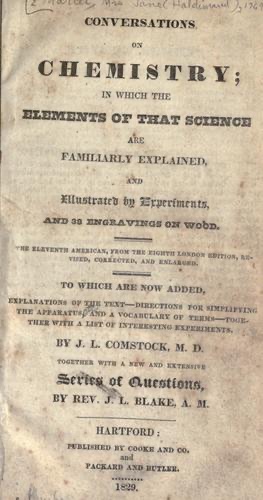
Cover of Conversations on Chemistry

Conversations on Chemistry

Jane Marcet

2 ideas

  1. Dialogue with two contrasting learner voices

    The book teaches through a tutor and two students of different temperaments: Emily is careful and methodical, while Caroline is impulsive, skeptical, and quick to leap to conclusions. Their questions, objections, and mistakes stand in for the reader's own, so a misconception gets raised and corrected at the moment a real learner would form it. Scientific principles are built step by step, with each student's reply showing whether the previous step has actually been understood.

  2. Chemistry seen in everyday phenomena

    The book explains chemical principles through things readers already meet: combustion in a candle or fire, respiration, the souring of milk, the rusting of metals, and plant growth. Treating the kitchen, the body, and the garden as working laboratories turns abstract ideas like affinity, caloric, and oxidation into processes the reader can watch at home. Familiar experience becomes evidence for the theory instead of a separate world from it.

Save and mark ideas in the app