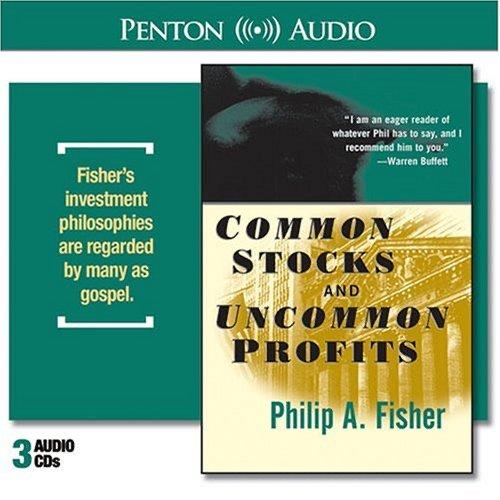
Cover of Common Stocks and Uncommon Profits

Common Stocks and Uncommon Profits

Philip Fisher

3 ideas

  1. Scuttlebutt: triangulate from the company's ecosystem

    Get a picture of a company's real strengths and weaknesses by questioning the people around it: customers, suppliers, competitors, former employees, and research scientists. Any one source is biased, but when many partial views are pooled they converge on an accurate picture. Competitors in particular will speak candidly about a rival's quality even when management will not.

  2. Almost never sell an outstanding company

    If a stock was bought correctly, in a company that keeps meeting the quality criteria, the time to sell it is almost never. Selling to catch an expected market decline or to lock in a large gain tends to cost more than it saves, because the investor rarely buys back in time and gives up years of compounding. There are only three valid reasons to sell: the original judgment was wrong, the company has deteriorated so it no longer qualifies, or a clearly superior opportunity needs the money.

  3. Judge management by candor in bad times

    How management talks when things go wrong tells you more than how it talks when things go well. Every business runs into disappointments, and a management that 'clams up' or hides problems when trouble comes has revealed something about its integrity and competence. The fifteen-point test also asks whether management works to grow sales beyond current products, and whether it gives up short-term profit for long-term gains.

Save and mark ideas in the app