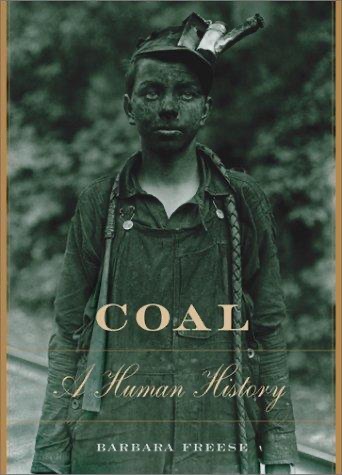
Cover of Coal: A Human History

Coal: A Human History

Barbara Freese

4 ideas

  1. The 1952 London Great Smog

    In December 1952 a temperature inversion trapped coal smoke from London's domestic hearths and power stations over the city for about five days, producing a fog so dense that people could not see their own feet. Roughly 4,000 people died in the immediate aftermath, with later estimates running far higher. The disaster finally pushed Parliament to pass the Clean Air Act of 1956, after centuries in which Londoners had complained about coal smoke without effective action.

  2. Wood scarcity forced Britain onto coal

    England did not turn to coal because it was a better fuel. It turned to coal because deforestation made firewood scarce and expensive by the 16th and 17th centuries. Coal was dirtier and smellier, and people considered it inferior, but they burned it out of necessity. That forced switch then gave Britain a head start in building the coal-based technologies that drove industrialization.

  3. Steam engine born to drain mines

    The first practical steam engines, Newcomen's atmospheric engines, were built to pump water out of flooded coal mines. They were so inefficient that they only made sense at the pithead, where fuel was nearly free. Coal therefore created the machine that let more coal be dug, a self-reinforcing loop in which the fuel paid for its own extraction and later spread the steam engine to factories, railways and ships.

  4. Pollution as a recurring political bargain

    Coal smoke shows the same cycle in medieval London, industrial Pittsburgh and modern China. Communities accept filthy air as the price of warmth, jobs and growth, and they call smoke a sign of prosperity. Read this way, pollution is a negotiated tradeoff shaped by who bears the damage and who gets the benefits, not an ignorance problem that information alone can fix.

Save and mark ideas in the app