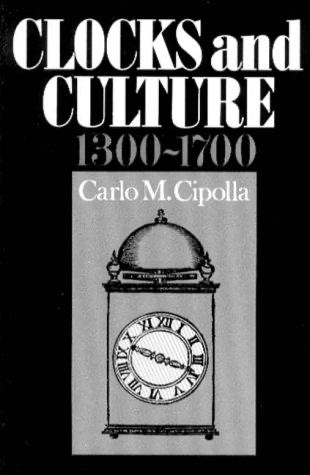
Cover of Clocks and Culture, 1300–1700

Clocks and Culture, 1300–1700

Carlo Cipolla

4 ideas

  1. Skilled craftsmen carry technology, not blueprints

    Clockmaking spread across Europe mainly through the migration of skilled artisans, not through written treatises or copied designs, because the essential know-how was tacit and lived in hands and workshops. Regions that took in mobile craftsmen, often religious refugees such as Huguenots moving to Geneva, London and the Dutch Republic, gained whole industries. Regions that expelled or restricted them lost those industries.

  2. Japan adapted clocks to its own time

    Unlike China, Japan's craftsmen copied European clocks and rebuilt them to fit the Japanese system of unequal temporal hours, which changed length with the seasons. This required inventive mechanisms such as adjustable foliot weights and movable hour markers. It shows active, skill-building adoption of a technology, even though the adapted clocks then followed a separate path from European precision timekeeping.

  3. Machines as a cultural habit

    The key difference between Europe and other civilisations was not access to particular inventions but a widespread social attitude that valued machines, tinkering and mechanical solutions for their own sake. On this view, technological divergence is explained by what a society wants and rewards in mechanical skill, more than by raw invention or resources.

  4. Clocks and guns as twin technologies

    Clockmaking and gunfounding grew side by side in Europe and drew on overlapping skills in metalworking, precision and mechanical design, so progress in one supported the other. This combined mechanical base helped give Europe both an organised sense of time and military superiority, which together underpinned its later expansion overseas.

Save and mark ideas in the app