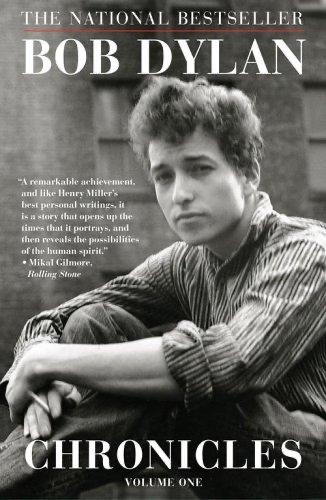
Cover of Chronicles: Volume One

Chronicles: Volume One

Bob Dylan

4 ideas

  1. Recovering a lost craft through technique

    By 1987 Dylan felt cut off from his own catalog. Rehearsing with the Grateful Dead, he could not connect to his old songs and considered retiring. A jazz singer in a small bar reminded him how to project, and he then rebuilt his playing on a numerical, triplet-based guitar method Lonnie Johnson had once shown him, which made his performances feel generative again and led to recording Oh Mercy with Daniel Lanois in New Orleans.

  2. Deliberately disappointing fans to escape a role

    Dylan argues that once the public casts you as a spokesman, excellence only deepens the trap. He says he intentionally released erratic, unfocused records around 1970 to disappoint that projection. He did this to protect his family and his privacy from people who invaded his Woodstock home, so lowering expectations served as a tool for regaining control of his life.

  3. Learning songwriting by transcribing Robert Johnson

    Dylan describes studying models at the level of their construction: he replayed Robert Johnson records repeatedly and copied the lyrics down to see how the images and free associations were put together. He had earlier absorbed Woody Guthrie's repertoire in depth, and in his own case this close immersion in masters came before his distinct voice.

  4. Omnivorous reading as a raw-material stockpile

    In the Greenwich Village apartment of friends, Dylan read across history, war strategy, poetry and fiction with no fixed curriculum, from Thucydides to Balzac to Clausewitz. Under this lens, an artist's inputs need not match their medium. Distant fields supply the language, stakes and archetypes that make a folk song feel larger than its genre.

Save and mark ideas in the app