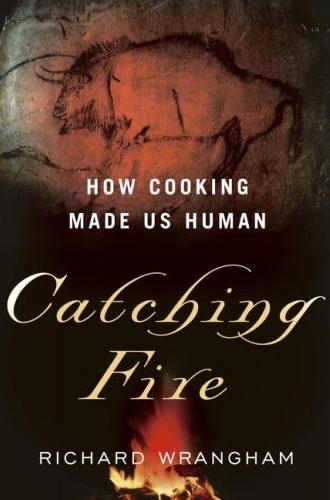
Cover of Catching Fire

Catching Fire

Richard Wrangham

6 ideas

  1. Cooking drove the emergence of Homo erectus

    Wrangham dates the adoption of cooking to about 1.8 million years ago, when Homo erectus appeared with smaller teeth, smaller jaws, a smaller gut and a larger brain. His argument is that these anatomical shifts only make sense if the species was already eating soft, energy-dense cooked food. That places cooking as a cause of human evolution, not a later cultural add-on.

  2. Cooking as external predigestion boosting energy

    Heat gelatinizes starch and denatures proteins, and it softens tissue, so the body spends less energy chewing and digesting. Food therefore yields more net calories than the same food eaten raw, even when the nominal calorie count is unchanged. Cooking works as an external stomach that does part of digestion's work before the food is eaten.

  3. Expensive tissue trade-off between gut and brain

    Brains and guts are both metabolically costly organs, so a species can afford a bigger brain only if it cuts spending somewhere else. Cooked food allowed a shorter, cheaper gut, and the energy saved could fund brain expansion. Reading anatomy as a budget shows why diet quality can limit or permit gains in intelligence.

  4. Raw-foodists fail to maintain body weight

    Studies of modern raw-food dieters, including the Giessen study, found chronic weight loss and high rates of disrupted or absent menstruation. This happened even with domesticated, low-fiber produce and blenders available. Wrangham uses this to argue that humans are now biologically adapted to cooked food and can't thrive on a truly raw diet.

  5. Cooking created the sexual division of labour

    Once meals had to be gathered and then cooked at a central hearth, food became a visible, stealable store. That made the cook vulnerable to theft by others. Wrangham argues that pair bonds developed partly as protection, with women cooking and men protecting their access, which led to a household economy with gendered roles.

  6. Chewing time freed for social activity

    Chimpanzees spend about six hours a day chewing tough raw food, while humans eating cooked food spend under an hour. The hours this freed up could go to hunting, travel, tool-making and social interaction. So cooking reshaped the daily time budget as well as the body.

Save and mark ideas in the app