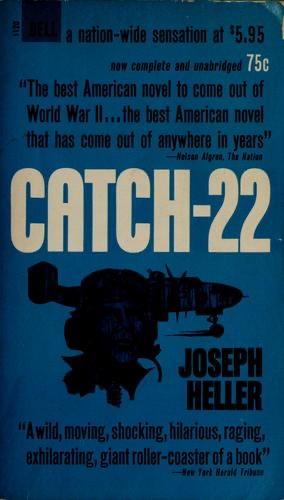
Cover of Catch-22

Catch-22

Joseph Heller

4 ideas

  1. Catch-22: the self-cancelling escape clause

    A rule offers an exit on a condition, and the act of applying for that exit is itself evidence that you don't meet the condition. A flier can be grounded for insanity, but asking to be grounded out of concern for your own safety shows a rational mind, so anyone who asks is sane and must keep flying. The exemption exists on paper but can never be used, which makes the system look fair while trapping everyone inside it.

  2. Milo Minderbinder bombs his own squadron

    Milo, the squadron's mess officer, builds a trading syndicate, M&M Enterprises, in which 'everybody has a share', and it grows until he contracts with the Germans to bomb his own base at Pianosa. He escapes punishment by showing how much profit the deal made. The episode satirizes market logic followed without limit, until treason gets defended as a business transaction.

  3. Moving goalposts keep institutional obligation endless

    Colonel Cathcart keeps raising the number of missions required before a man can go home, from 25 up to 80. He does it to win his own promotion, not to meet any military need. Once a crew member gets near the finish line, the finish line moves. A quota that the people who benefit from it can change at will stops being a contract and becomes a way of making service permanent.

  4. Self-preservation as sanity in insane systems

    The novel flips the usual judgment. Yossarian's refusal to die looks like cowardice or madness to the institution, but it is the only sane response to a system that treats lives as disposable. The 'sane' officers are the ones who follow a self-serving logic that gets people killed. Seen through this lens, being called 'crazy' often just means refusing to adopt an institution's values, and it says nothing about whether you have lost touch with reality.

Save and mark ideas in the app