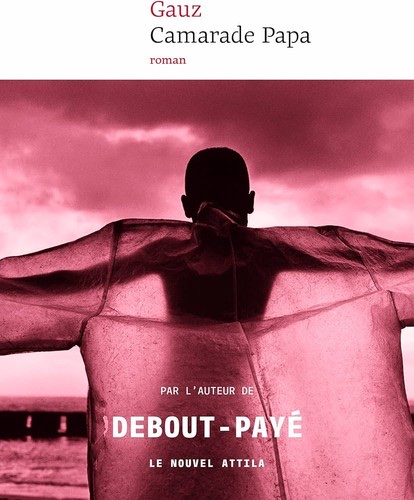
Cover of Camarade Papa

Camarade Papa

Gauz

4 ideas

  1. Dabilly's Path into Colonial Ivory Coast

    Dabilly is a young Frenchman with no prospects at home who sails to the Ivory Coast in the late nineteenth century. There he is drawn into the traders and officers whose trading posts and treaties with local rulers laid the ground for French colonial rule. His arc shows colonization being built by ordinary people seeking a way out, whose small personal choices add up to domination.

  2. Inherited Ideological Jargon as Estranging Eye

    The present-day narrator is a child raised by militant communists who describes everything, including family meals, schoolmates and his trip to Africa, in the vocabulary of class struggle. Applied literally by a child, the jargon becomes comic and shows how far a borrowed framework is from what it tries to describe. It also makes ordinary scenes strange enough to be seen freshly.

  3. Trading Posts and Treaties as Colonial Mechanism

    The novel shows commercial negotiations, trading posts and bargains with local chiefs as concrete means by which French influence took hold on the Ivory Coast. It stages these dealings as part of how that power was assembled on the ground, without claiming they alone or first produced official sovereignty.

  4. Colonial Traces Within a Roots Journey

    The novel sets a diaspora child's journey to Côte d'Ivoire alongside the colonial founding of that country, and during his search the child encounters his ancestor's traces and archives. The colonial record is one strand of how he meets his origins, woven together with family encounters and African legends.

Save and mark ideas in the app