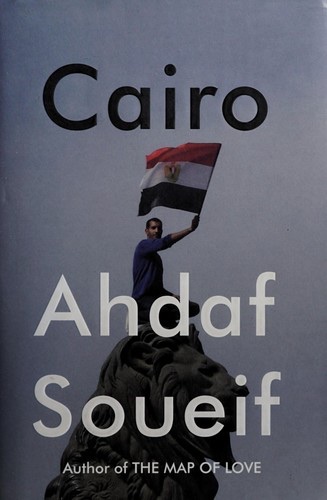
Cover of Cairo: My City, Our Revolution

Cairo: My City, Our Revolution

Ahdaf Soueif

4 ideas

  1. City as layered personal and political memory

    Soueif reads Cairo's streets, bridges, and buildings as palimpsests where personal memories sit on top of earlier political uprisings. Seeing a place this way turns a protest route into an argument about continuity: each march re-occupies ground earlier generations contested, so reclaiming the city's space becomes reclaiming its history from a regime that tried to erase it.

  2. Battle of the Camel defense

    On 2 February 2011, regime-backed thugs on horses and camels charged into Tahrir Square. Protesters with no weapons organized themselves on the spot: some broke up paving stones, others ferried rocks to the front lines, others ran field clinics, and together they held the square overnight. The regime meant the violence to scatter the crowd, but it hardened the protesters' resolve and drew more people in.

  3. Tahrir as prefigurative microsociety

    The occupied square became a working model of the country protesters wanted. Strangers collected garbage, checked IDs at entrances, shared food, and prayed together across the Muslim-Christian divide, with no central authority directing them. Practicing civic self-government in a bounded space showed that the regime's claim to be the only thing preventing chaos was false.

  4. Fear's collapse is the regime's collapse

    An authoritarian state that rests on a security apparatus survives mainly because citizens expect punishment, not because of active consent. Once enough people defy that fear together and see one another doing it, the regime's main instrument stops working.

Save and mark ideas in the app