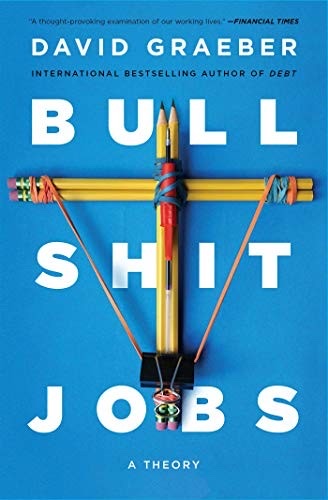
Cover of Bullshit Jobs

Bullshit Jobs

David Graeber

6 ideas

  1. Bullshit job defined by worker's own judgment

    A bullshit job is paid employment so pointless, unnecessary, or harmful that even the person doing it cannot justify its existence, yet feels obliged to pretend otherwise. The test is subjective and counterfactual: if the job vanished tomorrow, the world would be no worse off, and the worker knows it.

  2. Five types of pointless jobs

    Pointless jobs fall into five classes. Flunkies exist to make superiors look important. Goons exist only because competitors employ goons (lobbyists, corporate lawyers, telemarketers). Duct-tapers patch problems that shouldn't exist, box-tickers produce paperwork so an organization can claim it did something it isn't doing, and taskmasters supervise people who need no supervision or invent new bullshit work for others.

  3. Pretending work matters causes spiritual violence

    The harm of a bullshit job is not idleness but the forced pretense that it matters. Humans derive a sense of self from having effects on the world, so being paid to perform purposeless activity while acting as if it were purposeful produces depression, anxiety, and self-loathing. Good pay and easy hours do not offset this.

  4. Social value inversely tracks pay

    The more clearly a job benefits others, as with nurses, teachers, carers, and garbage collectors, the less it tends to pay. Society treats the satisfaction of useful work as partial compensation, and resents those who have it. Meanwhile pointless roles are rewarded with salary and status as compensation for their emptiness.

  5. Managerial feudalism explains job proliferation

    Bullshit jobs multiply not through market efficiency but through a political logic resembling feudalism. Executives gain status and power from the size of their retinues, and the extraction of rents from finance and bureaucracy funds layers of intermediaries. Seen this way, corporate headcount is about hierarchy and distribution of spoils, not production.

  6. Work as virtuous suffering is historically recent

    The belief that work is valuable because it is unpleasant and disciplining, independent of what it produces, took hold through Puritan theology and the rise of wage labor. It also turned time into a commodity the employer owns. This moral framing lets people defend pointless jobs simply because they are jobs, and makes universal basic income, which would let people choose how to contribute, seem morally threatening.

Save and mark ideas in the app