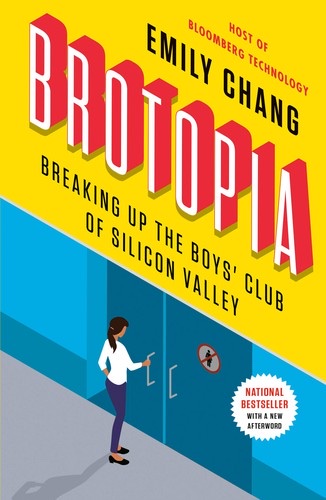
Cover of Brotopia

Brotopia

Emily Chang

6 ideas

  1. Personality tests that selected antisocial programmers

    In the 1960s, psychologists William Cannon and Dallis Perry built a hiring profile for programmers that treated 'disinterest in people' as a marker of aptitude, and companies like IBM adopted similar screening tests. The tests did not measure coding ability. They selected for a stereotype that skewed male, and the resulting workforce then became the evidence for what a programmer looks like.

  2. Women were pushed out of computing

    Women were central to early programming, and their share of US computer science degrees peaked around 37 percent in 1984. It then fell steadily as personal computers were marketed to boys and families bought them for sons. The gender gap was manufactured by marketing and culture after women were already in the field, not caused by a natural lack of interest.

  3. Pattern matching as venture capital bias

    Investors admit to funding founders who resemble past winners, such as young white male dropouts in hoodies, and they call this pattern recognition. Because the past winners were drawn from a homogeneous pool, the pattern encodes that homogeneity. Pattern matching turns historical exclusion into a funding criterion, which is why all-female teams have received roughly 2 percent of venture dollars.

  4. The PayPal Mafia's compounding homogeneous network

    PayPal's early team was almost entirely male, and its members hired friends who shared their traits. After the sale, they founded and funded many of the Valley's major companies, and each new venture recruited from the same network. One homogeneous founding team seeded an entire generation of firms, showing how an initial lack of diversity compounds through angel investing and referral hiring.

  5. After-hours culture gates access to deals

    Relationships, deal flow and investment opportunities in tech form at hot tubs, strip clubs and drug-fueled 'sex parties' as well as in offices. Women face a double bind: attending risks harassment and reputational damage, while declining cuts them off from the informal networks where capital is allocated. The exclusion runs through social venues that look optional but work as gatekeeping.

  6. Male-dominated partner ranks shape who gets funded

    Very few venture partners are women, and Chang connects this male control of firms to the exclusion of female founders, noting that firms with women partners are more likely to back women. Ellen Pao's suit against Kleiner Perkins illustrates how women inside a firm can be sidelined from decisions and board seats. The composition of the people deciding is one factor that makes capital access less of a meritocracy than the industry claims.

Save and mark ideas in the app