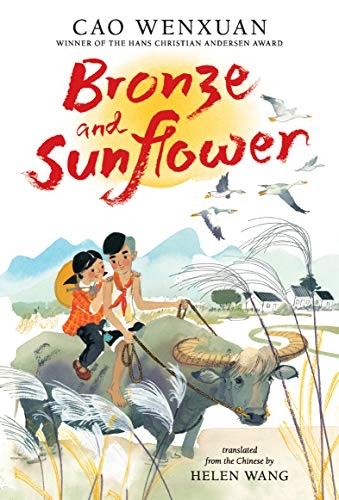
Cover of Bronze and Sunflower

Bronze and Sunflower

Cao Wenxuan

4 ideas

  1. A mute boy's family adopts orphaned Sunflower

    Sunflower's father, a sculptor sent to a May Seventh Cadre School beside the village of Damaidi, drowns trying to recover his sketches from the river, leaving her an orphan. Bronze's family, among the poorest in the village, take her in and later endure hardships including a locust swarm and a storm that flattens their house. When they can afford schooling for only one child, Bronze makes sure Sunflower is the one who goes, and he earns money by making and selling reed shoes.

  2. Scarcity turns care into visible sacrifice

    When a household has almost nothing, love cannot be shown by what it spends on someone. It shows up in what each member gives up. Each hardship the family faces becomes an occasion for someone to take the loss on themselves, and that repeated choice is what makes an outsider into kin rather than a guest.

  3. Wordless devotion through handmade objects

    Bronze cannot speak, so he expresses love through things he makes and gathers. He catches fireflies to make lanterns so Sunflower can read at night, and he makes her a necklace of icicles to wear when she performs. Muteness redirects feeling into acts that cost labor and ingenuity, which carry more weight than words would.

  4. Political upheaval seen through a child's intimacy

    The book shows the Cultural Revolution only at its edges, through a displaced father, a nearby labor camp, and a girl uprooted from the city. It keeps the foreground on seasons, landscape, and one friendship. Seen through that frame, the era's harm registers as broken family ties and chance kindness between strangers, not as ideology or events.

Save and mark ideas in the app