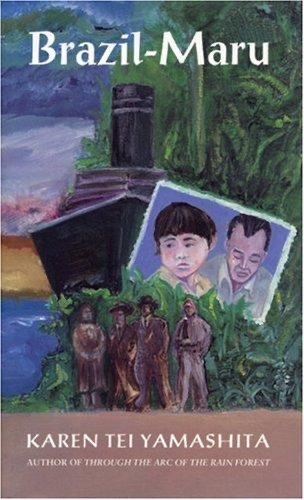
Cover of Brazil-Maru

Brazil-Maru

Karen Tei Yamashita

4 ideas

  1. Esperança: a Christian commune built around one man

    From 1925, educated Japanese Christian emigrants cleared land in the Brazilian interior to found Esperança, a communal farm meant to realize an ideal society abroad. Kantaro Uno, a charismatic heir from a wealthy family, became its driving force, building chicken farming into its economic base and pouring its surplus into baseball, art, and his own grand projects. Over decades his vision both sustained the community and drained its members, and the novel follows his family and followers through war, internal fracture, and his eventual decline.

  2. Charisma sustains communes while consuming their members

    A utopian community often survives because one magnetic figure supplies energy, direction, and meaning that its collective ideals cannot generate alone. Because that same person then defines what the commune values, members' labor, talents, and lives get spent on the leader's appetites and visions. The group cannot remove what is harming it without also removing what holds it together.

  3. Multiple narrators expose a leader's contested legacy

    Telling one community's history through five different narrators shows that a powerful leader is never one figure. Each witness's position determines whether he appears as visionary, tyrant, father, or wastrel: a child follower, a spouse, a rival, and a descendant each see something different. Reading across these accounts shows that the truth about a charismatic person lives in the contradictions between testimonies, not in any single account.

  4. Diaspora nationalism frozen at the moment of departure

    Emigrant communities cut off from their homeland can preserve a version of national identity that the homeland itself has abandoned. When news cannot be checked, loyalty to that preserved image can turn violent. In Brazil after WWII, some Japanese immigrants refused to believe Japan had lost and attacked fellow immigrants who accepted the defeat. Isolation, discrimination in the host country, and wounded pride together make denial function as a form of belonging.

Save and mark ideas in the app