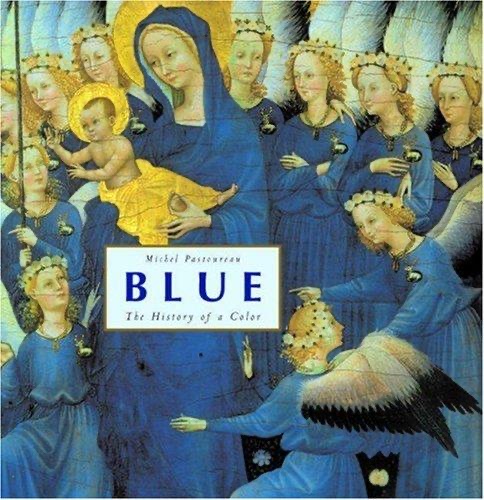
Cover of Blue: The History of a Color

Blue: The History of a Color

Michel Pastoureau

4 ideas

  1. Colour is a social fact, not physics

    The meaning, prestige and even perceived existence of a colour are produced by the society that names, dyes, wears and codes it, not by wavelengths or the eye. So a colour history has to be told through vocabulary, dye technology, dress rules and symbolism, and one colour can go from barely named to dominant with no change in human biology.

  2. Blue's twelfth-century rise through Marian imagery

    Greek and Roman culture gave blue little value; Romans linked it with barbarians and had no stable colour term for it. Around 1140–1150, sponsored by Abbot Suger at Saint-Denis and by the builders of Chartres, blue stained glass and the Virgin Mary's newly blue robe helped make blue a colour of prestige. Within a few generations French kings adopted azure in their heraldry, and aristocratic dress followed.

  3. Woad merchants' fight against imported indigo

    Woad growers and merchants in Thuringia, Picardy and Languedoc grew rich supplying Europe's blue dye. When sea routes brought in cheaper, stronger indigo in the sixteenth and seventeenth centuries, they lobbied for bans. Governments called indigo a 'devil's dye', and German edicts prohibited it into the 1600s, but the incumbents still lost.

  4. Blue's modern appeal as inoffensive consensus

    The book links blue's modern standing partly to its reputation as a moral, calm, neutral colour, encouraged by Protestant chromophobia and by Enlightenment and Romantic taste. By the twentieth century this made it the colour that offends least, which helps explain its use by international institutions and its place at the top of European favourite-colour surveys. Jeans, military uniforms and national flags, by contrast, have their own technical and political histories in the book.

Save and mark ideas in the app