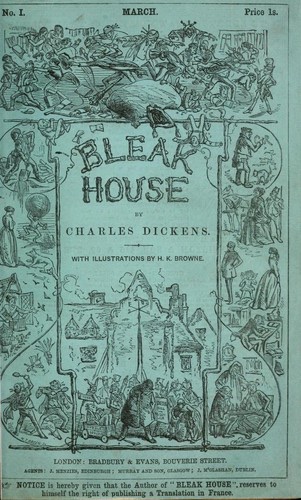
Cover of Bleak House

Bleak House

Charles Dickens

4 ideas

  1. Jarndyce and Jarndyce consumed by costs

    A Chancery suit over conflicting wills drags on for generations, ruining suitors such as Richard Carstone who stake their hopes on its outcome, while other Chancery suitors like Miss Flite wait endlessly on their own cases. When a later will is found and the case ends, the estate has already been swallowed by legal costs, so no one inherits. The court's own process has consumed the property it existed to distribute.

  2. Institutions sustain themselves by perpetuating delay

    Chancery is shown as a system whose practitioners are paid by process rather than by resolution, so delay is profitable and closure is against their interest. The lawyer Vholes embodies this: he treats keeping the suit alive as respectable duty while draining his client. An institution funded by its own procedures will tend to maximise procedure rather than achieve its stated purpose.

  3. Contagion reveals hidden social connection

    The disease that begins in the slum of Tom-all-Alone's reaches Esther Summerson and scars her, showing that the rich cannot wall themselves off from the poverty they neglect. Physical infection follows the same links that polite society denies, from crossing-sweeper Jo to the heroine. Tracing how harm travels shows that a society is one connected body, whatever its class boundaries claim.

  4. The detective as a social cross-section

    Inspector Bucket's inquiry into the murder of the lawyer Tulkinghorn takes him from Sir Leicester Dedlock's mansion to the slums and back, following evidence rather than rank. Lady Dedlock's secret past, first uncovered by Tulkinghorn, comes fully into the open as Bucket's investigation and pursuit unfold. Alongside the novel's other connecting threads, the detective's licence to move across social boundaries helps the crime story trace a whole society.

Save and mark ideas in the app