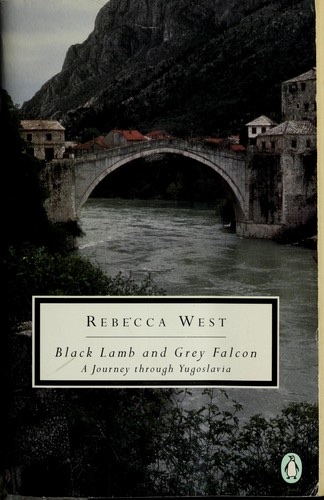
Cover of Black Lamb and Grey Falcon

Black Lamb and Grey Falcon

Rebecca West

4 ideas

  1. The black lamb sacrificed on Sheep's Field

    Near Skopje, West came to the sacred rock on St George's Eve and witnessed a black lamb's throat cut there the following morning, with a father marking his child's forehead with its blood. She took the rite as evidence of an old, repellent belief that good can be bought with an innocent's pain, and she traced that belief into Christian atonement doctrine and modern politics.

  2. Lazar's choice: preferring noble defeat

    In the Serbian ballad, a grey falcon offers Prince Lazar a choice before Kosovo in 1389: an earthly kingdom or a heavenly one. He chooses heaven, and he and his army die. West reads this as a lasting pattern in which idealists would rather lose with their virtue intact than win through compromise, and she saw it in the democracies of the late 1930s.

  3. Imperial misrule as a source of Balkan violence

    West argues that the Balkans' reputation for savagery reverses cause and effect, tracing much of the region's violence to centuries of Ottoman extraction and Habsburg bureaucratic contempt, which stunted its institutions and made conspiracy and assassination one recourse among parties, nationalist movements and democratic activity. On this reading, the 1914 Sarajevo killing of Franz Ferdinand owed more to misrule than to Slav barbarism.

  4. A 1934 assassination as a warning of war

    In October 1934, while recovering from surgery, West heard a radio report that King Alexander of Yugoslavia had been shot in Marseille by a Croatian-Macedonian terrorist network backed by foreign powers. She later watched the newsreel of his death. She concluded that the killing signalled another European war, and she went to Yugoslavia to understand a country whose fate she believed would decide her own.

Save and mark ideas in the app