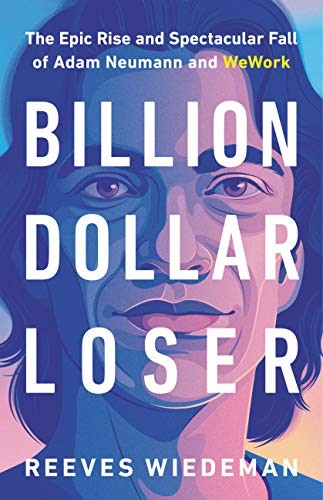
Cover of Billion Dollar Loser

Billion Dollar Loser

Reeves Wiedeman

3 ideas

  1. Unlimited capital removes the founder's feedback loop

    Scarce capital forces a founder to prove unit economics before expanding, and abundant capital removes that test. When an investor like Son pushes for faster growth and urges a founder to think bigger, losses stop working as a warning and start working as proof of ambition. The founder's grandiosity scales with the money available rather than with evidence the business works.

  2. Category arbitrage: real estate dressed as tech

    A company can win a much higher valuation by describing an old business model in the vocabulary of a higher-multiple industry. WeWork called itself a technology and community platform, using terms like 'space as a service' and 'community-adjusted EBITDA', to earn software-style multiples. Underneath, it was a landlord exposed to a maturity mismatch between fifteen-year lease obligations and month-to-month tenants.

  3. WeWork's S-1 punctured a privately protected story

    WeWork's private valuation rested on a few committed backers, chiefly SoftBank, so Neumann's story went years without adversarial scrutiny. The S-1 put his building leases to the company, the $5.9 million 'We' trademark sale, and his super-voting shares in front of skeptical public investors, and the valuation collapsed. Neumann gave up voting control, and his exit package was later disputed in court, while employees' equity lost much of its value.

Save and mark ideas in the app