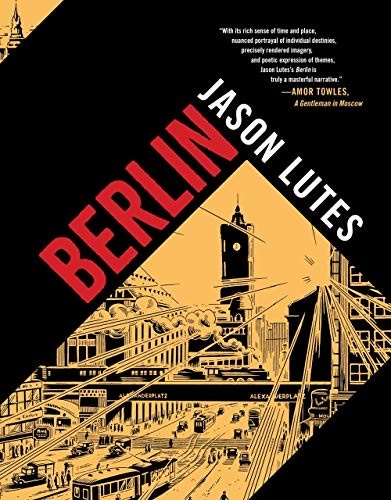
Cover of Berlin

Berlin

Jason Lutes

4 ideas

  1. Blutmai 1929 and the Split Left

    In May 1929 Berlin's Social Democratic police chief Karl Zörgiebel banned May Day demonstrations. When Communist workers marched anyway, police fired into crowds in Wedding and Neukölln and killed dozens of people, among them the fictional working mother Gudrun Braun. The massacre hardened Communist hatred of the Social Democrats as 'social fascists' and fractured the left, which could otherwise have stood jointly against the Nazis.

  2. Allegiance Follows Desperation, Not Doctrine

    People joined Communist or Nazi ranks mainly because those movements offered belonging, bread, uniforms and a target for anger during unemployment, not because they were convinced by the ideology. The Braun family shows this when it splits apart. The father drifts toward the Nazis and the children go to rival camps, so a single household reproduces the nation's polarization through grief and material need.

  3. The Detached Observer's Complicity

    The liberal journalist Kurt Severing believes that careful, balanced reporting of the truth is enough to defend a democracy. His ironic distance from both extremes leaves him unable to act as street violence decides events, and his skepticism becomes a form of paralysis. The lens shows how a commitment to observation can turn into passive witness to collapse.

  4. Collapse Seen Through Street-Level Accumulation

    The book traces the end of the republic through many ordinary lives: art students, jazz musicians, shopkeepers, workers and children. It does not center elections or leaders. From this view, democratic collapse is not one decisive event but an accumulation of small compromises, brawls, layoffs and normalized cruelties. Each seems survivable on its own until Hitler's appointment in 1933 arrives as merely the next item in the newspaper.

Save and mark ideas in the app