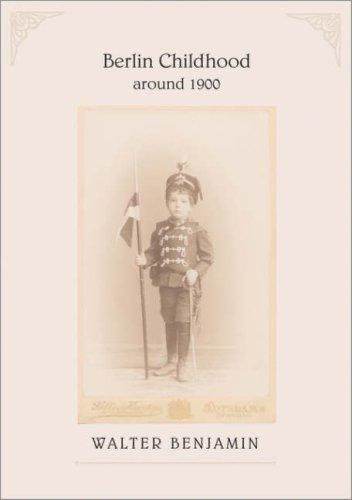
Cover of Berlin Childhood around 1900

Berlin Childhood around 1900

Walter Benjamin

5 ideas

  1. The rolled sock in the wardrobe

    As a boy, Benjamin would reach deep into the wardrobe for a pair of socks rolled together so that one sock formed a 'pocket' holding a 'little present' inside. He kept pulling the present out of its pocket until both vanished, because once unrolled the gift and its wrapping turned out to be a single sock. He says this taught him that form and content, the veil and what it veils, are one and the same.

  2. Remembering as inoculation against homesickness

    In exile, Benjamin deliberately called up the childhood images most likely to provoke longing, treating them like a vaccine. The idea is that a controlled dose of the longed-for past keeps homesickness from overwhelming the mind. He did this by recognizing that the loss is irretrievable for social and historical reasons, not merely personal ones.

  3. Losing yourself in a city is learned

    Benjamin says that not finding your way around a city means little, but losing yourself in it as one loses oneself in a forest requires schooling. He acquired this art late in life. Childhood in the Tiergarten supplied the dream that this later art fulfilled, rather than serving as the training for it.

  4. Childhood mimesis and distorted resemblance

    The child does not stand apart from things but becomes like them, hiding behind a curtain until he turns into something white and fluttering, or taking misheard words ('Muhme Rehlen' becomes 'Mummerehlen') as real beings. Benjamin says he was 'distorted by similarity' to everything around him.

  5. Memory organized by place, not chronology

    Benjamin sets aside biographical sequence and the continuity of a life. Instead he recovers the past through rooms, thresholds, objects and city sites: the loggia, the telephone in the back corridor, the otter's enclosure. Each place works like an excavation site where one person's experience and the history of a vanished social class sit in layers together. This makes a childhood readable as a historical document rather than a personal story.

Save and mark ideas in the app