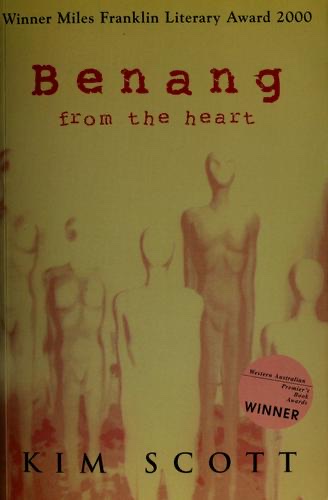
Cover of Benang

Benang

Kim Scott

3 ideas

  1. Harley, the 'first white man born'

    Harley Scat's grandfather Ernest Solomon Scat, an admirer of Chief Protector A.O. Neville's absorption policy, tracks his family's descent through genealogies, photographs and notes. He treats light-skinned Harley as the successful end product of a program to 'breed out the colour.' After an accident, and after the abuse he has suffered, Harley begins to float free of the ground. He then reverses the project: he uses Ern's own files, and his Noongar uncles Jack and Will, to recover the Aboriginal ancestors the archive meant to erase, and tells their story to the now-mute Ern he looks after.

  2. Absorption as genocide by breeding

    Absorption policy aimed to make Aboriginal people disappear by biological dilution rather than killing. The state controlled who could marry whom and removed 'half-caste' children from their families. Fractional blood categories treated each generation as a step toward whiteness, so the destruction of a people could be framed as welfare and administration.

  3. Belonging through country and story, not blood

    The novel presents Noongar identity as sustained by relationship to country, kin and shared storytelling rather than as a blood fraction that dilution can reduce. Harley recovers belonging by returning to country with his uncles Jack and Will and joining in song and story. He still hovers while singing at the end, so the book does not make that belonging simply end his levitation.

Save and mark ideas in the app