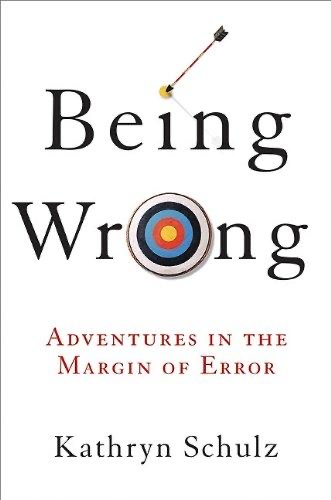
Cover of Being Wrong

Being Wrong

Kathryn Schulz

5 ideas

  1. Error blindness: wrongness is invisible now

    While we are wrong, being wrong feels exactly like being right, so there is no internal signal that marks a false belief. Error can only be recognized in the past tense. The moment we notice a mistake, it has already become a belief we used to hold.

  2. Three assumptions we make about dissenters

    When others disagree with us, we move through three explanations in order. First we assume they are ignorant and lack our information. If that fails, we assume they are idiots who can't reason from the facts, and finally that they are evil and are distorting the truth on purpose. The sequence protects our belief that our own view simply reflects reality.

  3. Anosognosia patients who deny their blindness

    Some brain-damaged patients are blind or paralyzed yet sincerely deny it and invent fluent explanations for their failures. Their certainty is complete and entirely false. The case shows that the mind produces conviction on its own terms, separate from access to the truth, and that feeling certain is not evidence of being right.

  4. Certainty is a feeling, not knowledge

    Certainty is an emotional state produced by the brain and is only loosely tied to how well our beliefs match the evidence. We value it because it spares us the discomfort of doubt and makes decisive action feel justified. That comfort also makes us resist doubt, so beliefs held with certainty are hard to question or revise.

  5. Error as evidence of imaginative capacity

    Our ability to be wrong comes from the same machinery that lets us form models of the world beyond what we directly see, through inference, imagination, and storytelling. A mind that could never be wrong could not guess, hypothesize, or create. Seen this way, fallibility is the cost of intelligence rather than a defect in it, and admitting error becomes a source of growth and humility.

Save and mark ideas in the app