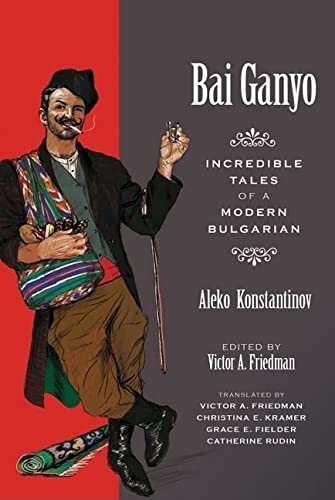
Cover of Bai Ganyo

Bai Ganyo

Aleko Konstantinov

4 ideas

  1. Bai Ganyo rigs a provincial election

    After returning from Europe, Bai Ganyo joins local politics. He and his allies swing behind whichever party holds power, then use cudgel-wielding thugs, a pliant mayor and intimidation at the polling station to deliver the 'right' result. The episode shows parliamentary elections in the young Bulgarian state treated as a transaction for patronage, with the voting forms kept and the substance stripped out.

  2. Imitated modernity over an unchanged ethos

    Bai Ganyo takes on the outward signs of Europe: the frock coat, the train journeys, talk of 'civilization' and 'progress'. He keeps a predatory peddler's logic in which every relationship is judged by what it can yield. The type shows how a society can import the vocabulary and costume of modern institutions faster than the norms that make those institutions work, producing a hybrid that looks European and behaves as a hustler.

  3. Bai Ganyo's opportunism pays in young Bulgaria

    In the book Bai Ganyo freeloads on hosts, cheats on small costs and switches loyalties to whoever holds power, and he suffers little for it. His rise into politics and the press depends on more than shamelessness, though: officials and allies back him and help with the coercion. The book shows one opportunist prospering where courtesy and principle carry little weight and those in power reward his kind.

  4. Satire as self-recognition, not mockery

    The sketches are told by a circle of young educated Bulgarians who laugh at Bai Ganyo while admitting he is 'ours', a mirror of their own society. Their laughter carries embarrassment and complicity, not distance. Read this way, national satire works as a diagnosis the satirist cannot exempt himself from, which makes the vulgar figure more disturbing than a caricature of an outsider.

Save and mark ideas in the app